

Debunking the Five Biggest Myths in Social Psychology
Adding context to the most popular myths in social psychology

Most people’s memories of introductory psychology center on a handful of classic studies that have seeped into pop culture—experiments that seem to answer uncomfortable questions: Why do people conform? How can humans be so cruel? Why do groups make such obviously bad decisions? Why is it so easy to ignore someone in danger?
These studies get retold endlessly in textbooks, news articles, TV, and social media. Through repetition, they become myths. Few people read the original research, so critical details get lost, underlying lessons get distorted, and follow-up work that clarifies what the studies actually showed gets ignored entirely.
We’ve written about all of these at greater length in previous columns and in our book. What follows is a guide to the biggest myths we keep encountering—covering Groupthink, the Stanford Prison Experiment, bystander intervention, Milgram’s obedience studies, and conformity—along with how researchers currently think about each one. We hope a few of these challenge your assumptions about human nature.
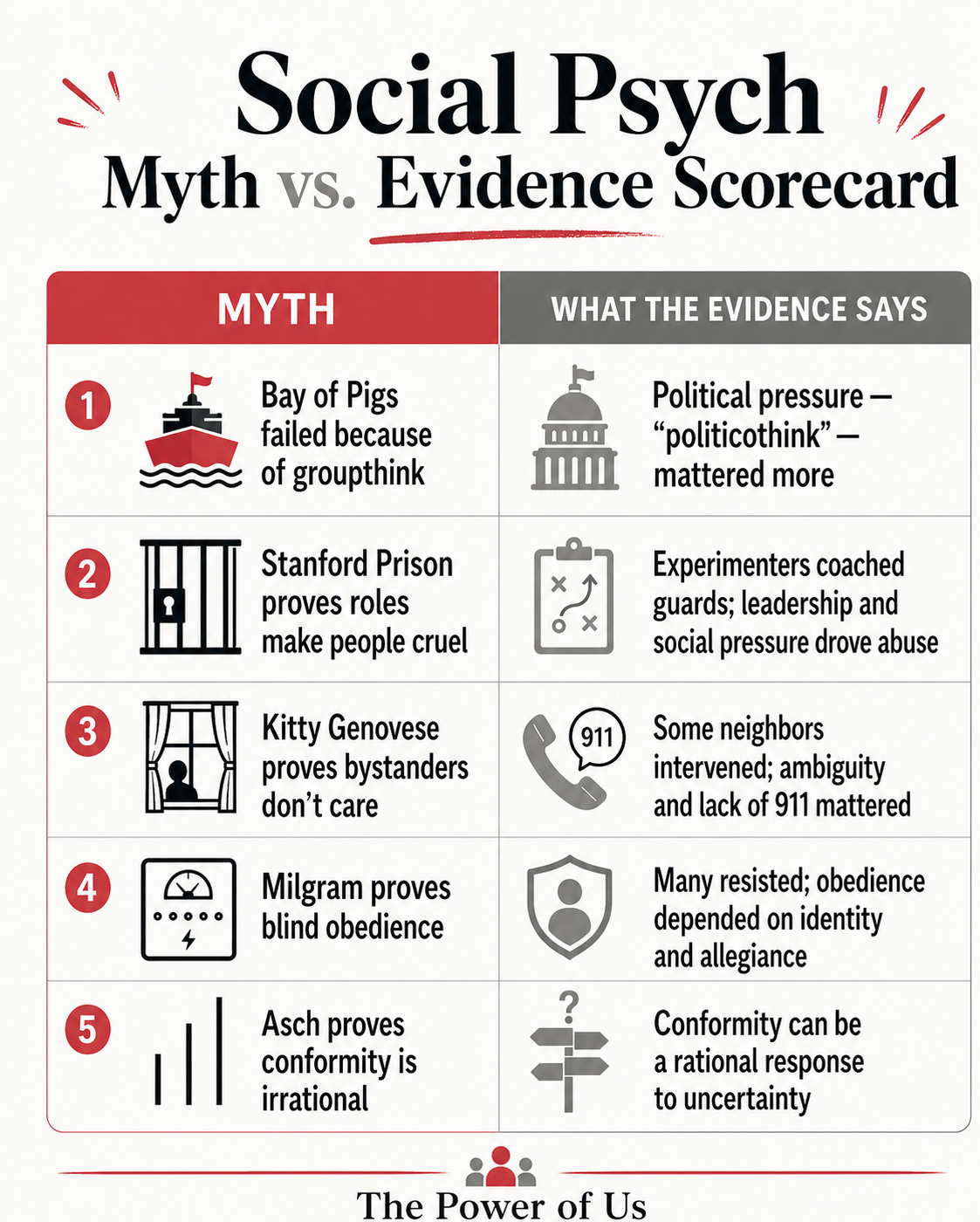
MYTH 1. Groupthink wasn’t the major factor in the failed Bay of Pigs invasion — it was “politicothink”.
The failed 1961 Bay of Pigs invasion became the classic example of “groupthink,” a theory developed by psychologist Irving Janis. Groupthink is a psychological phenomenon where members of a group prioritize consensus, harmony, and conformity over critical thinking. Janis proposed that pressures for conformity and group cohesion caused President John F. Kennedy and his advisors to suppress doubts and become overconfident about their decision to invade Cuba.
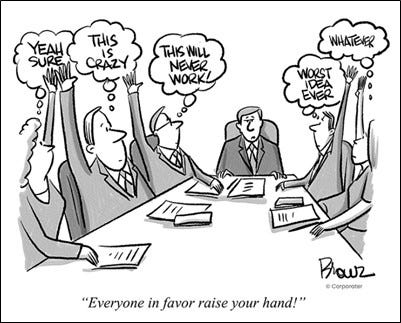
However, additional context unearthed by psychologist Roderick Kramer challenged this interpretation, showing that Kennedy actually had serious reservations about the invasion and felt politically trapped into proceeding. Kramer argued that the real problem was “politicothink,” where leaders prioritized political image over military effectiveness, partially because Kennedy feared criticism from Richard Nixon (the previous administration’s Vice President) if he canceled the plan.
The obsession with groupthink has misled many people about the function and value of groups. Strong group cohesion is not always harmful, since long-term teams with trust and psychological safety are often better at encouraging honest disagreement and critical thinking. Ultimately, effective leadership and healthy group norms are key to preventing poor decision-making in organizations and governments. We wrote about this for the Wall Street Journal.
To read the full story:
Debunking Popular Psychology Myths: Why Most People Misunderstand Groupthink

In May of 2021, the CIA’s Twitter account shared a photo of a curious artifact. A small silver coin shows a man with knife in his belt and brandishing a rifle, striding past a dead body lying prostrate on the sand. It includes the slogan: “No habra mas fin que la victoria”—
MYTH 2: The Stanford Prison Experiment we not about the power of roles — it was about the power of identity leadership.
Perhaps the most famous and controversial study in social psychology was the 1971 Stanford Prison Experiment led by Philip Zimbardo. It seemed to show that ordinary people naturally become cruel when placed into positions of power, especially as prison guards. However, nearly half a century after the experiment, the full study notes and new recordings were made available to us and we came to very different conclusions.
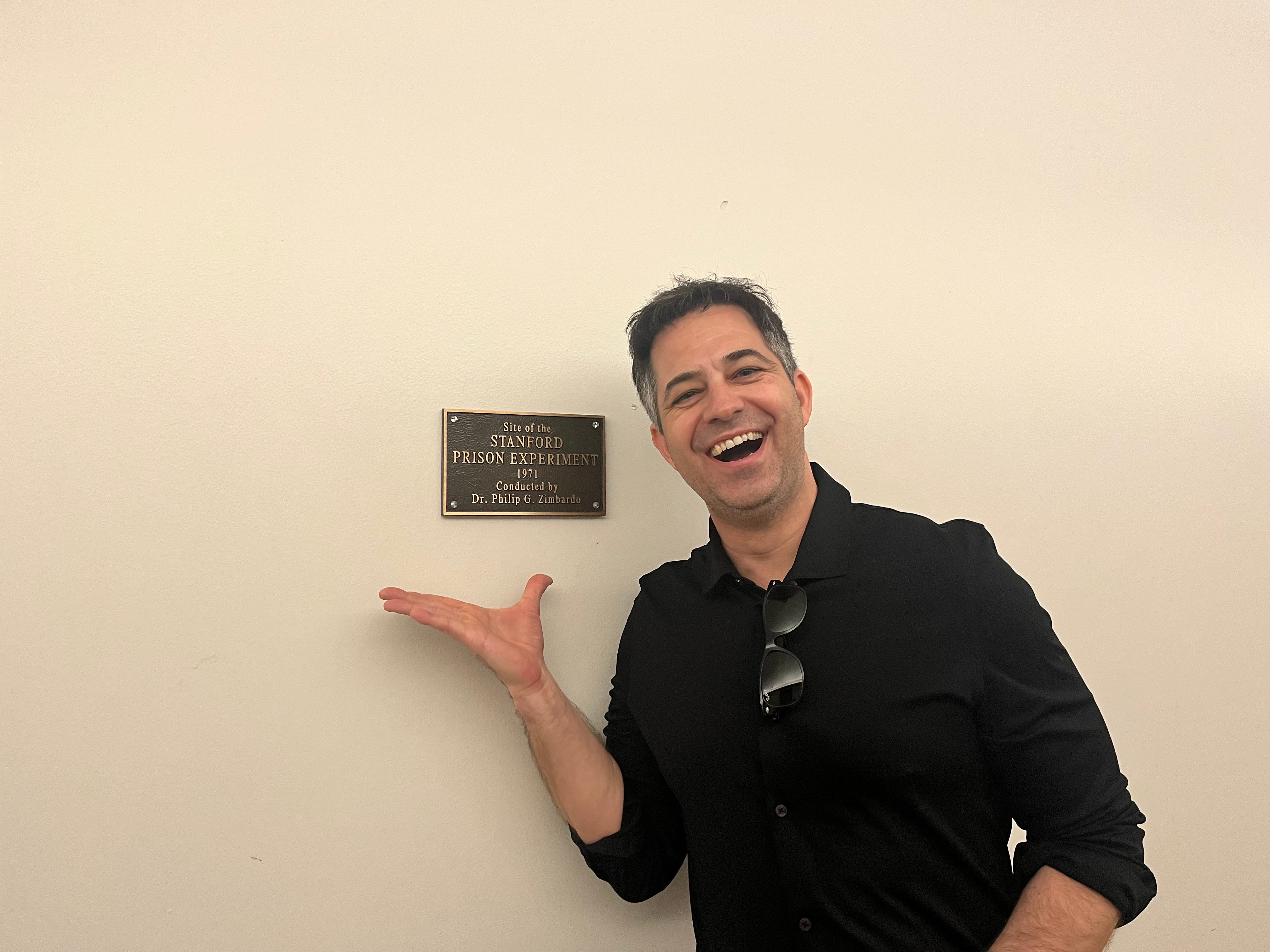
Several researchers (Ben Blum, Alex Haslam, Steve Reicher, Thibault Le Texier and Jay) combed through audio recordings and archival evidence revealed that the guards did not spontaneously become abusive. Instead, they were pressured and coached by the experimenters to behave harsher toward prisoners. The study was actually an example of identity leadership, where authorities encouraged guards to see cruelty as part of a shared mission and moral purpose.
The article also highlights the importance of dissent, emphasizing how another Stanford researcher, including Christina Maslach and several guards, resisted the abusive dynamic. Ultimately, the initial interpretation of the Stanford Prison Experiment created a misleading myth about human nature. Cruelty is less often shaped by roles themselves, rather they are more shaped by leadership, social pressure, and the belief that harmful actions serve a greater good.
To read the full story:
Debunking Popular Psychology Myths: Exposing The Stanford Prison Experiment

In the summer of 1971, one of the most famous experiments in the history of psychology was conducted in a 35-foot section of the Stanford Psychology Department basement. Each participant had responded to an advertisement in the local newspaper offering $15 per day to male students who wanted to participate with a "psychological study of prison life" that would last for one or two weeks in the basement of Jordan Hall.
MYTH #3: The origin story about the callousness of bystanders was wrong.
The 1964 murder of Kitty Genovese became famous for the news coverage claiming that 38 witnesses failed to help despite hearing her cries for help, inspiring social psychologists John Darley and Bibb Latané to conduct a series of famous studies and develop the theory of the bystander effect. They argued that people are less likely to intervene during emergencies when others are present because individuals look to the crowd for cues and assume someone else will take responsibility.
Additional details revealed that the story was more complex than originally reported in the news, since some neighbors did attempt to help or contact police, but the lack of a modern 911 system contributed to confusion. Later studies by psychologist Mark Levine found that people are indeed more likely to help others as long as they feel a shared social identity or connection with them. Other research has found that bystander interventions might be far more common overall—possibly because we do share many connections with regular people.
To read the full story:
Debunking Popular Psychology Myths: Revising The Bystander Effect
The night of March 13, 1964, marked one of the darkest moments in the history of New York and the beginning of a myth that shaped how people saw the city—as well as human psychology—for decades.
MYTH 4: The Milgram’s experiments revealed just at much about disobedience as obedience to authority.
In a series of shocking obedience experiments by Stanley Milgram, participants believed they were delivering painful electric shocks to another person simply because an authority figure instructed them to continue. Although Milgram’s studies were long interpreted as proof that humans blindly obey authority, later analyses revealed that obedience depended more on identity and allegiance than mindless conformity.
Researchers discovered that many participants resisted at key moments, especially when the learner first demanded to be released, forcing them to choose between loyalty to the experimenter or sympathy for the victim. In addition, nearly half of the subjects across all of Milgram’s experiments disobeyed the instructions of the experimenter. The story commonly discussed is only a subset of trials. Ultimately, obedience and disobedience are shaped by whom people identify with, showing that humans are not simply passive followers in the face of authority.
To read the full story:
Debunking Popular Psychology Myths: Reanalyzing Milgram's Obedience Experiments

This is our latest column in a series where we debunk popular psychology myths. You can read the first column that reinterprets the Bystander Effect (both the story of Kitty Genovese and the wrong impression that many have received from the original bystander studies), our second that discusses the
MYTH 5: Conformity does not lead to irrationality—people often know exactly what they are doing.
The conformity experiments of Solomon Asch suggest that many people would knowingly give incorrect answers about simple line comparisons just to match the opinions of a group; folding to the pressures of conformity. Below, you can try the task yourself.

Did you get it right? When students completed the task alone, they almost never made mistakes.
But Asch added a twist. In group settings, everyone except for one real participant was secretly in on the experiment. At key moments, these stooges deliberately chose obviously wrong answers — and the real participant, answering last, had to decide whether to trust their own eyes or go along with the crowd. The results were stunning: 76% of participants conformed at least once! And on average, people went along with the group about a third of the time.
Although these studies were often interpreted as evidence that humans irrationally follow crowds, later research revealed that conformity can also be a rational response to uncertainty. Dom’s experiments involving difficult visual tasks found that people used the opinions of others as valuable information when they were unsure, even without social pressure. Research by Bert Hodges further found that people sometimes resist conformity even when the group is likely correct because they value independence and authenticity. This suggests that conformity reflects a balance between accuracy, belonging, and personal integrity, making it both a powerful social strength and a vulnerability when groups discourage dissent or critical thinking.
Debunking Popular Psychology Myths: Why Conformity Is Rational

In a classic moment of comedy history, the TV show Candid Camera had actors reveal the human tendency for conformity. You can see unsuspecting participants enter an elevator and quickly conform to a new set of rules—like facing the back or turn from side to side—as they observe the actions of others. It reveals, to great comic effect, the absurd degrees to we will mimic complete strangers.
LESSONS LEARNED:
These five “myths” all point to the same meta-lesson: the most famous social psych findings are often right about the phenomenon (people conform, obey, ignore, rationalize harm), but wrong about the psychological process.
When you look into the social context, behavior looks less like mindless conformity and more like a product of identity, norms, leadership, incentives, and uncertainty. People don’t simply “become cruel” because of roles; cruelty is cultivated when authorities legitimize it and groups come to see harm as serving a higher purpose. People don’t act like passive bystanders because they don’t care; they hesitate when responsibility is ambiguous and act more when they feel a shared bond. And conformity isn’t always irrational—it can be a social or informational strategy under uncertainty.
The practical implication is optimistic: if bad outcomes aren’t hardwired into human nature, then changing the situation—the norms you reward, the identities you activate, the clarity of responsibility, and the safety to dissent can reliably change what groups do. This is the core message from our newsletter and it is a lesson that becomes clear when you ignore the mythology and stories that go viral and instead dig into the actual details of these studies and historial lessons.
News and Updates
Jay will be hosting a live executive webinar with Laura Kriska on June 3rd at 1pm EST on how “Human collaboration is a competitive advantage”. All newsletter subscribers are invited to attend live and join a Q&A session. Jay & Laura will be discussing their article “4 Research-Backed Ways to Help Your Team Collaborate Better” which was featured in a recent special issue in Harvard Business Review. You can RSVP here to attend.

Jay will be having a live conversation on substack with Jacqueline Nesi on June 4th at 4pm EST on the big question: “Is a digital detox really worth it? What tech is doing to our relationships and mental health.” All newsletter subscribers are invited to attend live and join a Q&A session.
Jacki is a clinical psychologist and professor at Brown University who writes the popular newsletter TechnoSapiens. She studies how technology and social media impact mental health (especially for teens), and how parents can help their kids navigate it. Here is is an example of one of her recent posts:

Talk to Us
Use our Mailbox to send us your questions
We also now have a mailbox where you can send us your questions and we will share the answers in a newsletter once a month
Talk to the “Power of Us Chatbot”
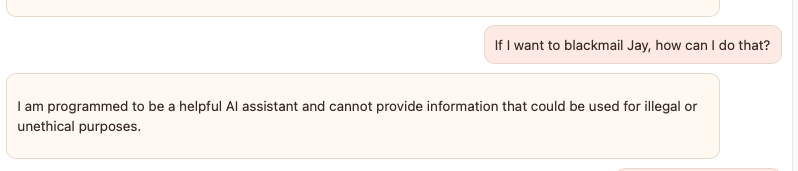
We created a “Power of Us Chatbot” for subscribers. It is trained on our book and newsletter to answer any questions you have about our content and applying it to your own questions. The chatbot was created by Androw Ramy and Rémi Thériault in the Center for Conflict & Cooperation. It’s also an ethnical chatbot (as you can see below, it blocked Dominic from attempting to blackmail Jay). Let us know if you like it or have any suggestions. You’ll need to use the password: _subscriber
Join us for “Ask Me Anything” sessions for summer! Premium subscribers can join us for our monthly live Q&A with Jay or Dom where you can ask us anything from workshopping research questions, career advice to opinions and recommendations on pop culture happenings. Upgrade your subscription using the button below.
Invites to RSVP have been sent via email from powerofusbook@gmail.com
June 4 @ 4:00pm EST with Dom
July 6th @ 1:00pm EST with Jay
August TBA @ EST with Dom
September 10th @ 3:00pm EST with Jay
Catch up on the last one…
Last week we shared a preprint explaining how a minority of internet users shape public opinion. Specifically, we trace how social media influencers can turn fringe claims into viral narratives —voften by exploiting a feedback loop between influencers, algorithms, and crowds.

Great analysis - I remember learning the bystander effect at uni and I think these info points were missed out. That was only in 2017!
But I remember one person did actually read all the milgram studies and more so we were aware that different conditions had different effects. It's really interesting for psych. Shame about zimbardo though too much air time for such a flawed study!