

You Didn’t Choose All Your Beliefs
Turi Munthe on the hidden forces that shape belief—from God and ghosts to politics and pineapple pizza.


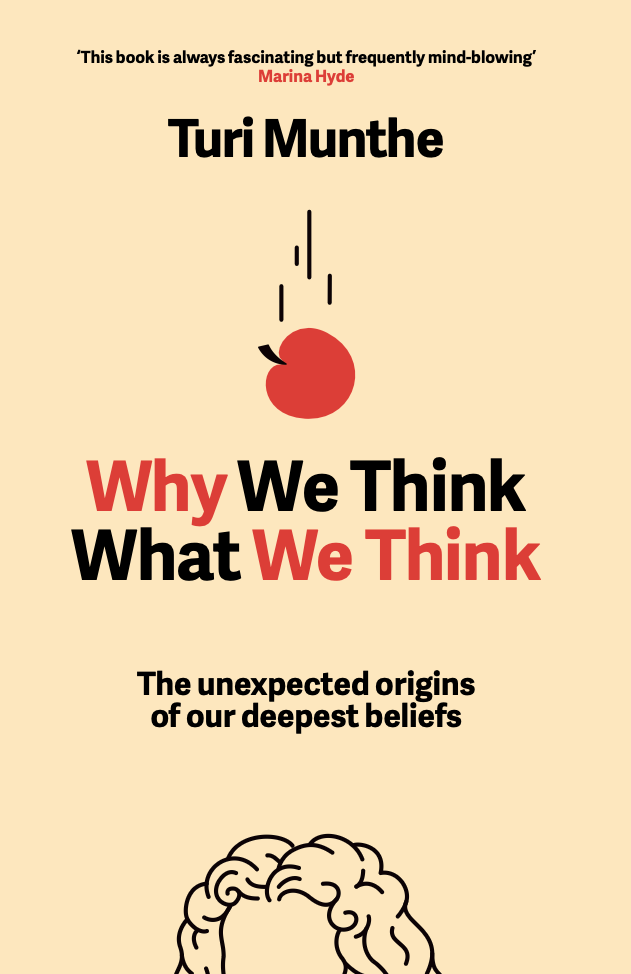
Why do some people believe in ghosts but not God? Why do liberals tolerate pineapple on pizza more than conservatives? Why do descendants of rice farmers tend to think differently from descendants of wheat farmers? We like to imagine our beliefs are chosen carefully, through deliberation. But many of them are shaped by forces we barely notice. In a new book titled Why We Think What We Think: The Unexpected Origins of Our Deepest Beliefs, writer and policy analyst Turi Munthe argues that our beliefs are shaped by a vast network of hidden influences—from the crops our ancestors cultivated and the climate we grew up in to the structure of our brains and even our genes. He argues that social identity is “a fundamental driver of many our beliefs. In fact, many of our opinions ONLY make sense as expressions of social identity.”
“We don’t see things as they are, we see things as we are”
- Anaïs Nin
Why We Think What We Think explains why people disagree about so much. Rather than suggesting our beliefs are fixed, the book argues that understanding social influences can create more intellectual humility (the recognition that our beliefs may be wrong) and help us be better equipped to engage with people who see the world differently. Through this lens, Turi explains several unusual patterns of beliefs: descendants of rice farmers tend to hold different values than descendants of grain farmers, physical appearance influences economic beliefs, and environmental conditions shape preferences for different forms of leadership. He argues that we shouldn’t take our ideas too seriously because many of them — even our deepest convictions, from politics to morality to religion — are the product more of circumstance than of careful deliberation.
Turi a writer and former policy analyst, has spent years mapping the hidden foundations of belief. He founded Parlia, an encyclopedia of opinion that developed tools to help people better understand the foundations of their beliefs. For us, the book raises a deeply social-psychological question: when our beliefs feel personal, moral, and self-evident, how much of what we think is really inherited from the groups, environments, and institutions that we inhabit?
In this interview, we Turi explains:
why people disagree so deeply
how geography, ancestry, and institutions shape belief
whther genes and brains influence ideology
and what it means for persuasion, tolerance, and democracy
You can learn more and buy a copy of Why We Think What We Think here. To save 10% off through Bookshop, use the code WHYWETHINK10!
Turi is also giving away a free copy — see the details at the end of the interview to enter the drawing.
What does your book teach us about social identity or group dynamics?
Social identity influences many of our behaviours, but it’s also a fundamental driver of many our beliefs. In fact, many of our opinions ONLY make sense as expressions of social identity. That’s weird, because we think of ideas as being primarily useful for their epistemic function — we judge them on their truthfulness. But many of our deepest held beliefs really only perform a social function. We hold certain opinions to compete with our peers — virtue-signalling, for example. We hold others to show we’re special — ‘luxury beliefs’ (beliefs that only some people can afford – like ‘defunding the police’), for instance, or conspiracy theories which allow those who believe them to feel superior to the ‘sheeple’ who haven’t seen the truth.
But the most important social function of our ideas is related to belonging. Humans are social creatures, and can’t survive alone: we are constantly trying to signal that we’re included. It’s why religions command us to believe literally unbelievable stories. Subscribing to the belief that Jesus walked on water or that Moses parted the Red Sea or that Muhammad flew to the heavens on a winged mule is the conceptual equivalent of growing your hair long over your temples for orthodox Jewish men, or wearing a veil for conservative Muslim women — they are outward displays of commitment and loyalty to the group.
The old line that ‘people prefer to be wrong together than right alone’ isn’t an indictment of humanity’s intelligence, but rather proof that ‘belonging’ is almost always more important to our survival than being ‘right’.
What is the most important idea readers will learn from your book?
There are three key ideas that I think are important, and particularly important today in our hyper-polarised world.
1. We shouldn’t take our ideas too seriously because many of them — even our deepest convictions, from politics to morality to religion — are the product more of circumstance than of thought. They are dependent not on our reading, or our life experiences, or our reasoning, but on the culture of our ancestors, the geography of the places we grew up in, the shapes of our faces and our brains, and our genes. None of which we have the slightest control over.
2. Our political instincts are evolved. What we call right and left-wing attitudes are behavioural tools that are best adapted to different environmental circumstances. Right-wing attitudes serve us best in times of threat. Left-wing attitudes serve us best in times of opportunity. The most successful societies are those in which both cohabit and bring the fruits of their differing approaches to the collective: the right protects while the left can innovate.
3. We are better at thinking together than alone (even when we’re drunk, as I show in the book!). Human reason evolved around the campfire, in conversation and argument. The idea of the lone genius is a myth, because all the best ideas come from intellectual conflict. That is why the top university towns are all quite small and quite dense, why the best research is often done by teams of academics, and why parliamentary democracy — where policies are thrashed out in the cauldron of public debate — is the least bad of all political systems.
But those three ideas all boil down to one core idea: as thinking individuals and as societies trying to improve out lot, we need the other side. Our intellectual adversaries across politics, ethics or even disciplines are actually our greatest asset.
What is one statistic or study in your book that everyone should know?
That if you put a 17 year-old in a brain scanner, you can tell their politics with 70% probability. The brains of leftwingers and rightwingers, even relatively young ones who haven’t built up decades of experience of the world, are noticeably different. Differences in the amygdala and anterior cingulate cortex predict whether we lean right or left.
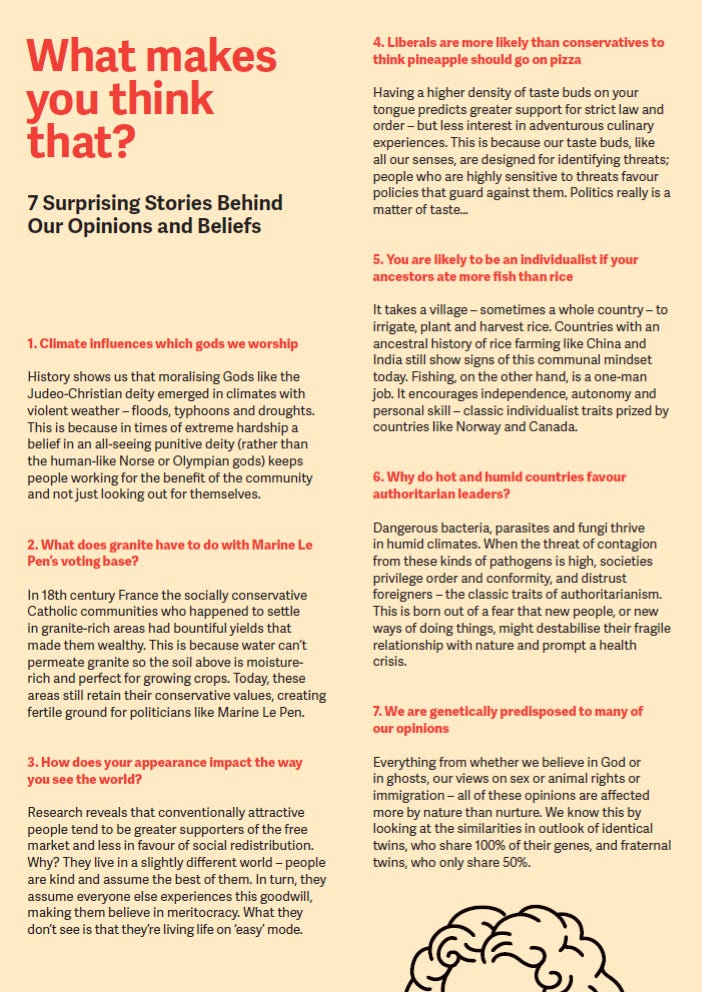
It’s a pretty definitive demonstration that our ideas aren’t separate from ourselves, that thinking isn’t somehow abstract, but embodied and specific to each of us. Here are seven more surprising stories behind opinions and beliefs:
What will readers find provocative or controversial about your book?
Most of us are prepared to accept that culture plays a role in the formation of our ideas, or that geography, climate or psychology might influence our values and beliefs. But there is something deeply disconcerting about the notion that our opinions might have their roots in our biology, that we can be genetically predisposed to ideas. What about intellectual agency? Is freedom of thought limited by our own bodies?
Talking about ideas in the language of biology or genetics is also extremely dangerous. It can, and has led people to pathologise ideologies and ways of thinking, to talk of them in the language of illness and aberration. The Nazis saw communists as deviants, the Soviets ‘rehabilitated’ their political enemies with heavy psychiatric treatments, and liberals after WW2 tried to pathologise Fascism as a psychological maladaptation.
But there IS a link between our opinions and our genes. Our biologies don’t predetermine our thinking, but they do predispose us to certain worldviews. Thinking of ideas in their biological context might instead de-pathologise them.
Genetics should help us recognise that diversity of thought is ‘natural’. It might help us recognise religious belief or atheism, or left-wing or right-wing attitudes, not only as ‘moral choices’ but also as natural dispositions. It should help take the sting outrage and moral disapproval out of the way we judge the other side. The communist and the libertarian, the tradwife and the ecowarrior, the peacenik and the hawk are all natural expressions of our human diversity.
Do you have any practical advice for people who want to apply these ideas?
Think of the people you disagree with as partners - the Rafael Nadal to your Roger Federer. The competition between the two of them elevated not only their own practice, but the very game of tennis.
The best thinking has often happened in the interplay between intellectual opponents. Think of Watson and Crick, or Kahneman and Tversky, or Van Bavel and Packer ;-). We think best when we think in conversation because argument is the way humans evolved to reason. Thinking is a contact sport. It goes against our conciliatory instincts, but we should do all we can to put ourselves in argument’s way.
🎁 Book Giveaway Details 📖
To enter Turi’s book giveaway, either…
Be a paid subscriber to the newsletter. Paid subscribers are automatically entered into all our monthly book giveaways!
You can subscribe or upgrade your subscription below.
If you are not a paid subscriber yet, make sure you have a free subscription and simply leave a comment answering the question below:
Which of the seven surprising stories behind our opinions and beliefs stood out to you and why?
This giveaway is open worldwide. Enter before July 28th, 12 pm PST. One winner will be selected at random and will receive an email from powerofusbook@gmail.com.
News and Updates
Use our Mailbox to send us your questions
We also now have a mailbox where you can send us your questions and we will share the answers in a newsletter once a month.
Talk to the “Power of Us Chatbot”
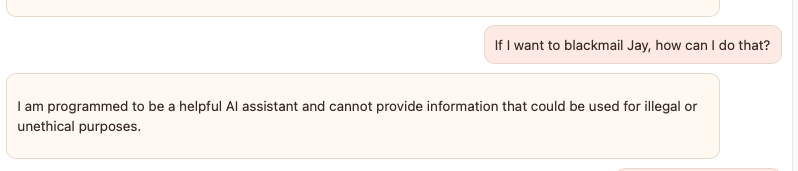
We created a “Power of Us Chatbot” for subscribers. It is trained on our book and newsletter to answer any questions you have about our content and applying it to your own questions. The chatbot was created by Androw Ramy and Rémi Thériault in the Center for Conflict & Cooperation. It’s also an ethnical chatbot (as you can see below, it blocked Dominic from attempting to blackmail Jay). Let us know if you like it or have any suggestions. You’ll need to use the password: _subscriber
Join us for “Ask Me Anything” sessions for summer! Premium subscribers can join us for our monthly live Q&A with Jay or Dom where you can ask us anything from chatting about research, career advice, professional dilemmas, to opinions and recommendations on pop culture happenings. At our July meeting, multiple people showed up and we designed a study together explore how people update their beliefs.
Join us! Upgrade your subscription using the button below. Invites to RSVP will be sent via email from powerofusbook@gmail.com.
August TBA @ EST with Dom
September 10th @ 3:00pm EST with Jay
October TBA @ EST with Dom
November 5th @ 4:00pm EST with Jay
Catch up on the last one…
Last week, we summarized a substack live event hosted with Techno Sapiens where Jay and Jacqueline dicussed multiple findings about the impacts of social media on relationships and mental health.
Learn more about THE POWER OF US
If you like our newsletter, we encourage you to check out our award-winning book “The Power of Us: Harnessing Our Shared Identities to Improve Performance, Increase Cooperation, and Promote Social Harmony”. You can learn more about the book or order it from the links on our website (here or scan the QR code below).

 | A guest post by
|