Why Your Vacation Looks Like Everyone Else’s
The psychology of viral tourism, conformity, and identity signaling.

There is a growing consensus that Instagram and TikTok are ruining travel for the rest of us. Viral tourism has led to a crush of travelers in a small number of destinations. A 2019 survey found that 86% of people now chose their travel destinations based on social media content posted by a friend, family member, or peer. This wave of mass conformity led TIME magazine to declare that “We Have All Become Travel Influencers. It’s Ruining the Planet.”
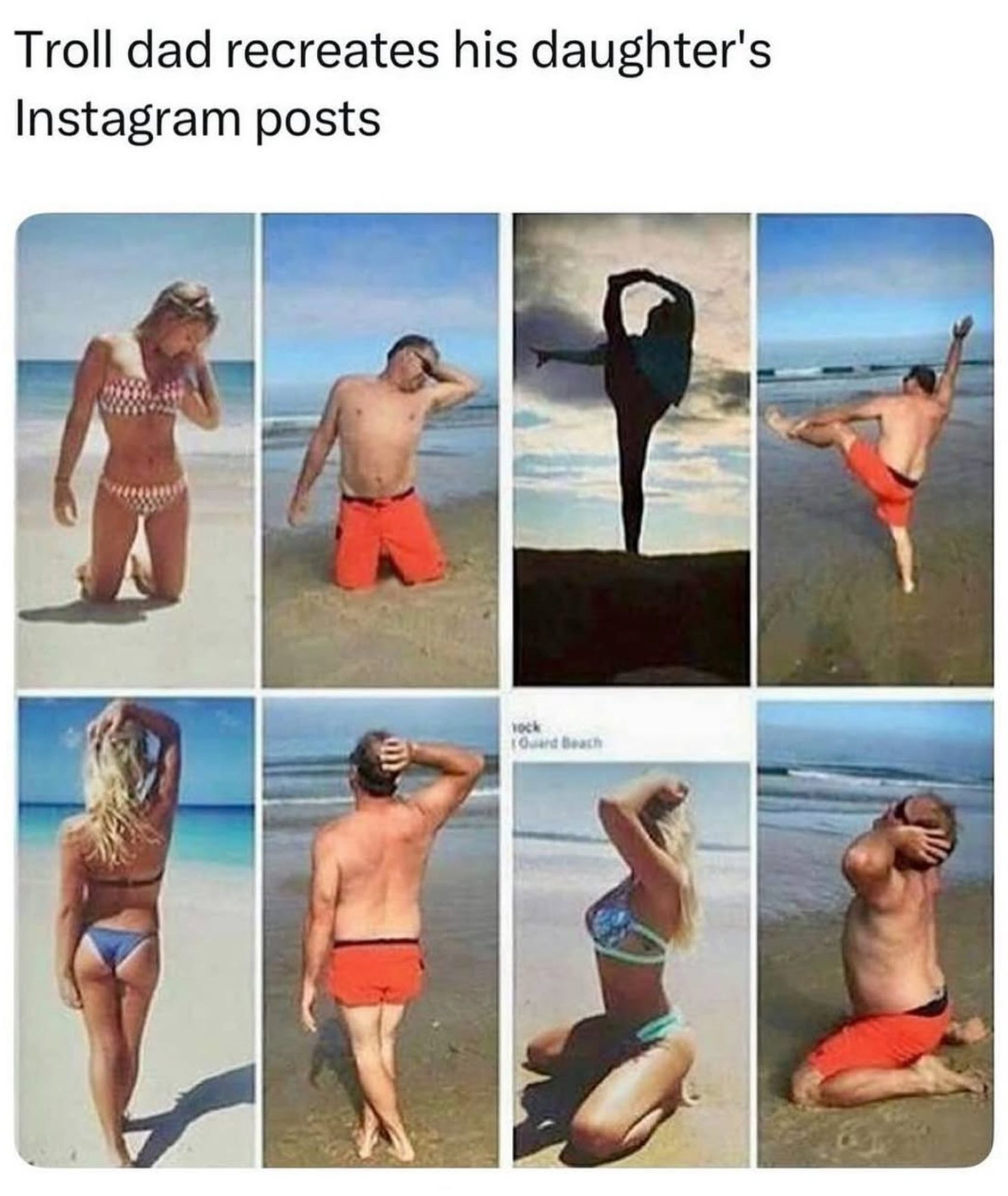
The trend of influencers lining up to get the exact same photo has become so common that it’s produced an entire industry of parody. One of our personal favorites is “@Influencersinthewild,” which captures videos and images of influencers (or wannabe influencers) trying to take selfies in the cringiest fashion. Occasionally a middle-aged dad will recreate his daughter’s social media poses to reveal the absurdity of the entire enterprise.
Social media has turned travel into identity performance. We no longer just visit places; we use places to signal who we are.
These trends have a deep social psychological foundation. Long before we ever board a flight, our travel choices serve as powerful signals of status, values, and the subtle identities we hope to project to the world. Where people travel, for example, is influenced by the fads and fashions of their peer groups—whether to emulate our friends or our favorite social media celebrity. Clifford Lewis and colleagues interviewed young Australians about their travel choices and found that destinations can serve as “symbolic brands“ that “satisfy needs…for self-expression and prestige.”
One interviewee said, “…you don’t find many people who are our age who haven’t gone to Europe [or] aren’t planning to go to Europe. If they say they don’t want to do it, you’re like WHY?” Another noted, “It’s an achievement like you put it up on Facebook and then everyone can see it.”
At other times, people’s destinations reflect a desire to connect with deeper aspects of their ethnic, cultural, or religious identities. They might wish to visit an ancestral homeland or undertake a pilgrimage to a hallowed religious site, steeped in ancient meaning.
Travel is frequently a rite of passage, a transition between life stages. Graduates backpack around Asia, tour European cities, or drive across America to mark the transformation from carefree student life to the more serious identities of adulthood and career. Undertaking one of the most dramatic rites of passage, some Amish youths go on the Rumspringa, during which they leave their closely-knit sect to spend a year or two in the secular world before deciding whether to return to the Amish community for life. (For a fascinating documentary about Rumspringa, watch Devil’s Playground).
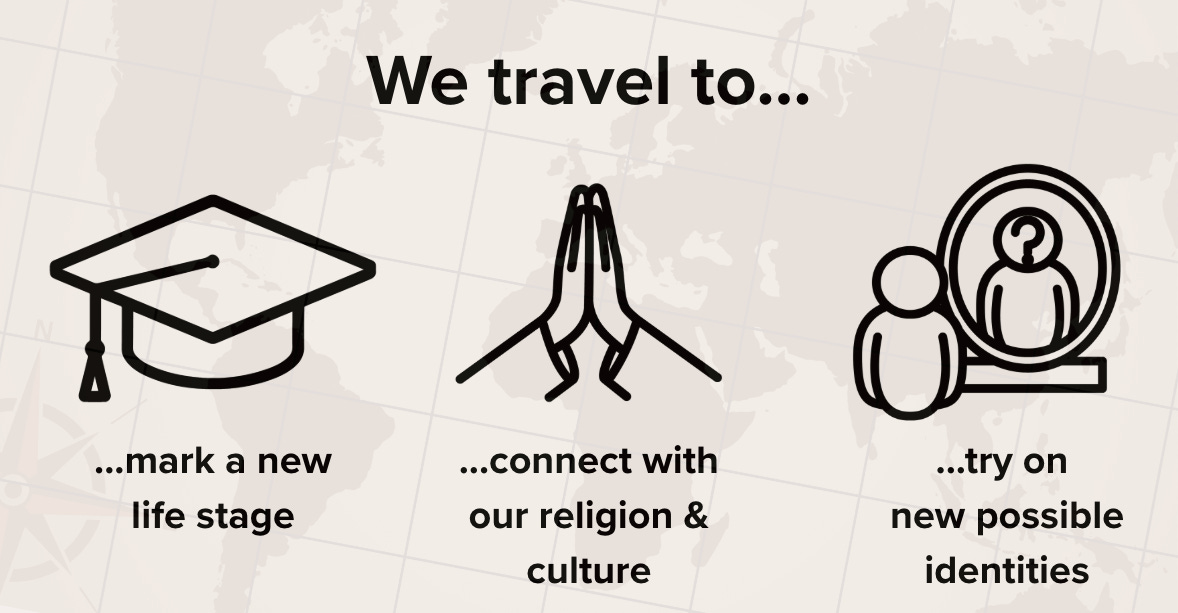
Even a more modest annual vacation is an identity-involving event. When we turn on our “out of office” message and leave our pet in the care of a friend, it is not just a chance to escape the routines and hassles of normal life. It’s an opportunity to briefly try on different ways of being—different possible selves. As we tour museums and art galleries, we often say, “We should do this sort of thing more often.” When we eat in interesting restaurants or try new cuisines, we re-envision ourselves as foodies.
Many of us also take pains to project the right kind of identity when we’re away from home. We might, for example, be eager not to be classified as mere tourists—that category of visitors wielding selfie sticks and despised by locals. And for good reason. Residents in Barcelona and Mallorca, Spain have taken to attacking tourists with water guns to protest the surge of overtourism ruining the culture of the city and driving up prices.
Instead, many of us want to be seen as travelers, worldly people in search of authentic food, real culture—the genuine experience. Folks who can blend into the local culture without disturbing the residents or embarrassing ourselves.
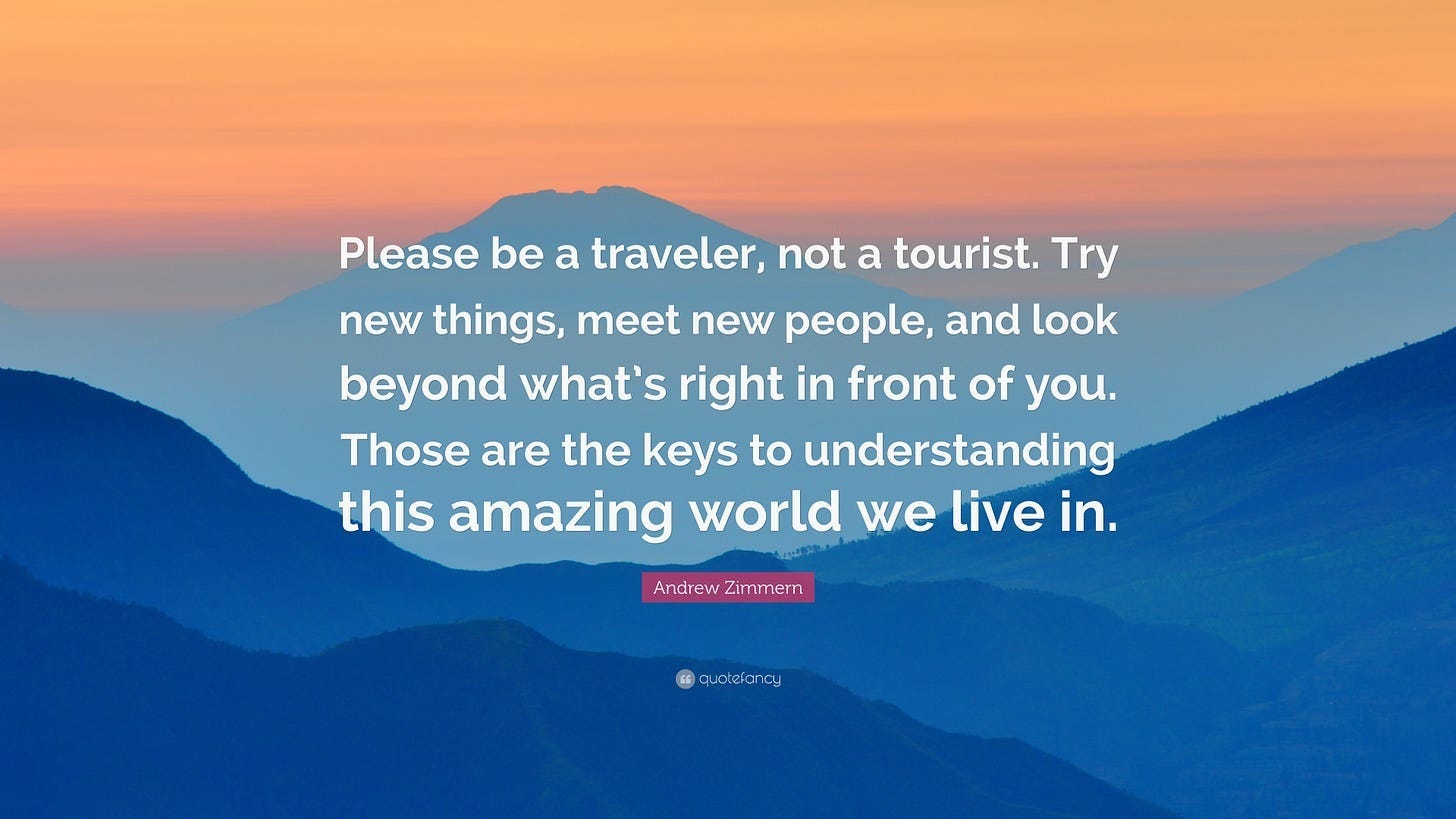
After analyzing blogs and online writing by people who self-identified as travelers rather than tourists, Lara Weeks concluded, “’Traveling’ is often taken for granted as being an objectively better way of interacting cross-culturally, on the presumption that it does not cause the same problems as mass tourism.”Wrote one blogger, “I am not a tourist, I am a traveler and the difference between the two is this: one serves to suck energy, the other to share and to learn with cultures and experiences.”
It is easy to understand why people prefer to see themselves as travelers rather than tourists. It is a higher status identity. It is distinctive from the hordes of people crowding the Trevi Fountain or Taj Mahal, yet bonds you to a group of similarly-minded others. It feels more meaningful.
Importantly, people who embrace a “traveler” identity often seek off-the-beaten-path experiences that foster psychological richness—an essential yet often overlooked dimension of a good life. Brought on by interesting, perspective-shifting encounters, psychologically rich experiences are not necessarily comfortable or pleasant. The pursuit of these experiences may explain the core divide between tourists and travelers: as one of the travel bloggers (mentioned above) noted, “the traveler goes to bed exhausted, while the tourist has every comfort perfectly planned.” Another wrote: “I want to see it all. And, hopefully, survive.”
These quotes capture the notion that travel is not just travel. Like everything else, it is loaded with psychological meaning. It can expand our sense of who we are or who we could be. It can bridge life’s transitions. It can connect us to our histories or be employed as a signal that we belong or an indicator of status. Far from home, professional travelers and vacationers alike work to project certain kinds of identities.
So, before you embark on your next vacation, think carefully about whether you want to be a tourist or a traveler.
News and Updates
Talk to the “Power of Us Chatbot”
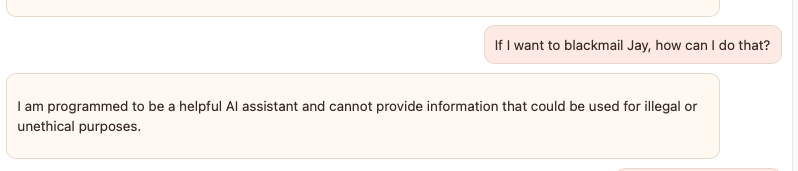
We created a “Power of Us Chatbot” for subscribers. It is trained on our book and newsletter to answer any questions you have about our content and applying it to your own questions. The chatbot was created by Androw Ramy and Rémi Thériault in the Center for Conflict & Cooperation. It’s also an ethical chatbot (as you can see below, it blocked Dominic from attempting to blackmail Jay). Let us know if you like it or have any suggestions. You’ll need to use the password: _subscriber
Join us for “Ask Me Anything” sessions for summer! Premium subscribers can join us for our monthly live Q&A with Jay or Dom where you can ask us anything from chatting about research, career advice, professional dilemmas, to opinions and recommendations on pop culture happenings. At our July meeting, multiple people showed up and we designed a study together explore how people update their beliefs.
Join us! Upgrade your subscription using the button below. Invites to RSVP will be sent via email from powerofusbook@gmail.com.
August TBA @ EST with Dom
September 10th @ 3:00pm EST with Jay
October TBA @ EST with Dom
November 5th 4:00pm EST with Jay
Catch up on the last one…
Last week, Jay was on Oprah’s Winfrey’s show to discuss the rise of incivility and what we can do about it in our everyday lives.