

The Two Kinds of Patriotism
As the U.S. turns 250 we explain the bright and dark side of national identity


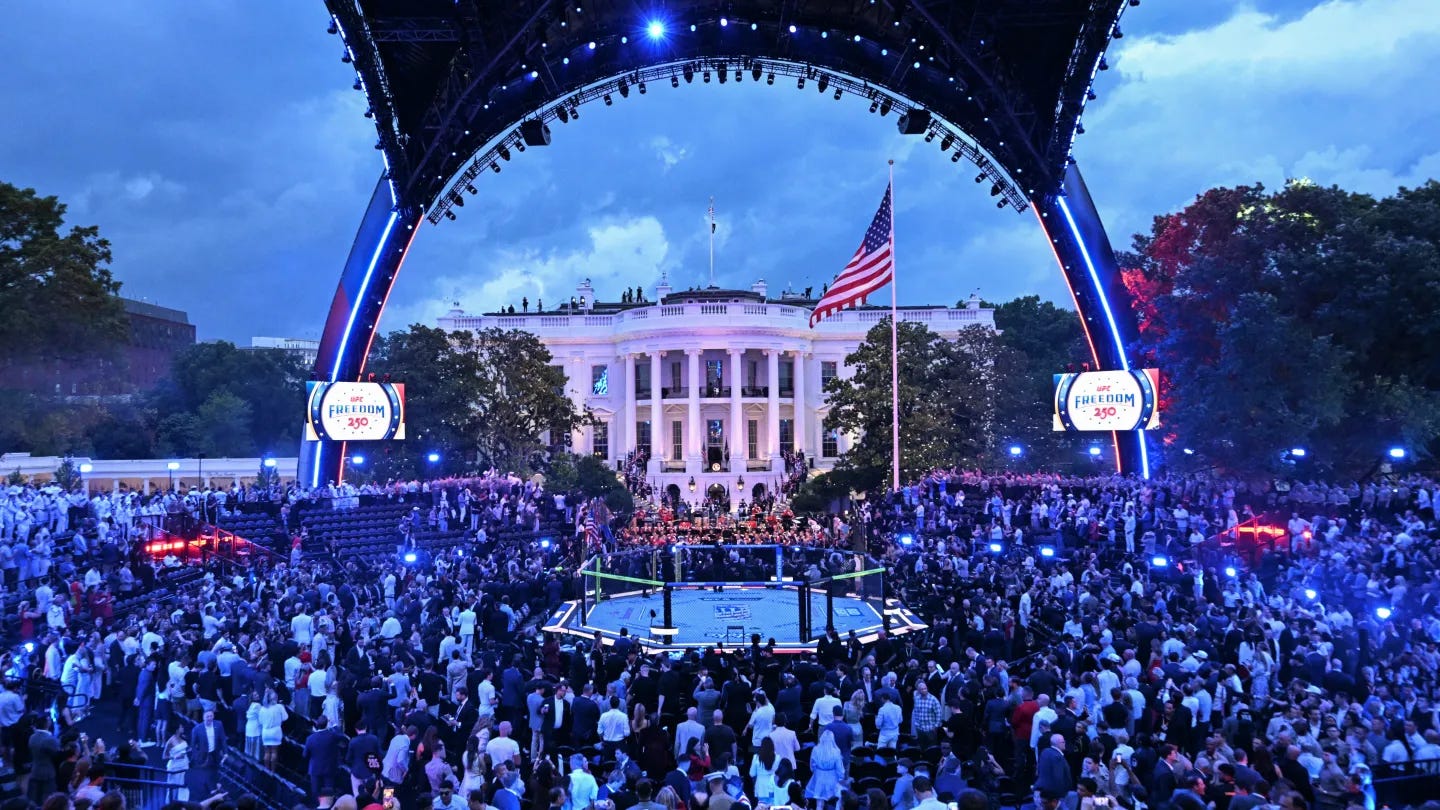
On July 4, the United States will celebrate its 250th birthday. The White House has pledged to “showcase our nation and celebrate American greatness,” kicking off the birthday bash with an Ultimate Fighting Championship event on the White House lawn.
America’s 250th anniversary was meant to be a moment of shared national pride. Instead, it arrives at a time when national pride itself has become a source of conflict. The question is no longer simply whether people love their country, but what kind of love that is.
In honor of the 250th anniversary of signing the Declaration of Independence in the U.S., today’s newsletter unpacks healthy and harmful forms of national identification and how they shape the world in profoundly different ways.
The Many Faces of National Pride
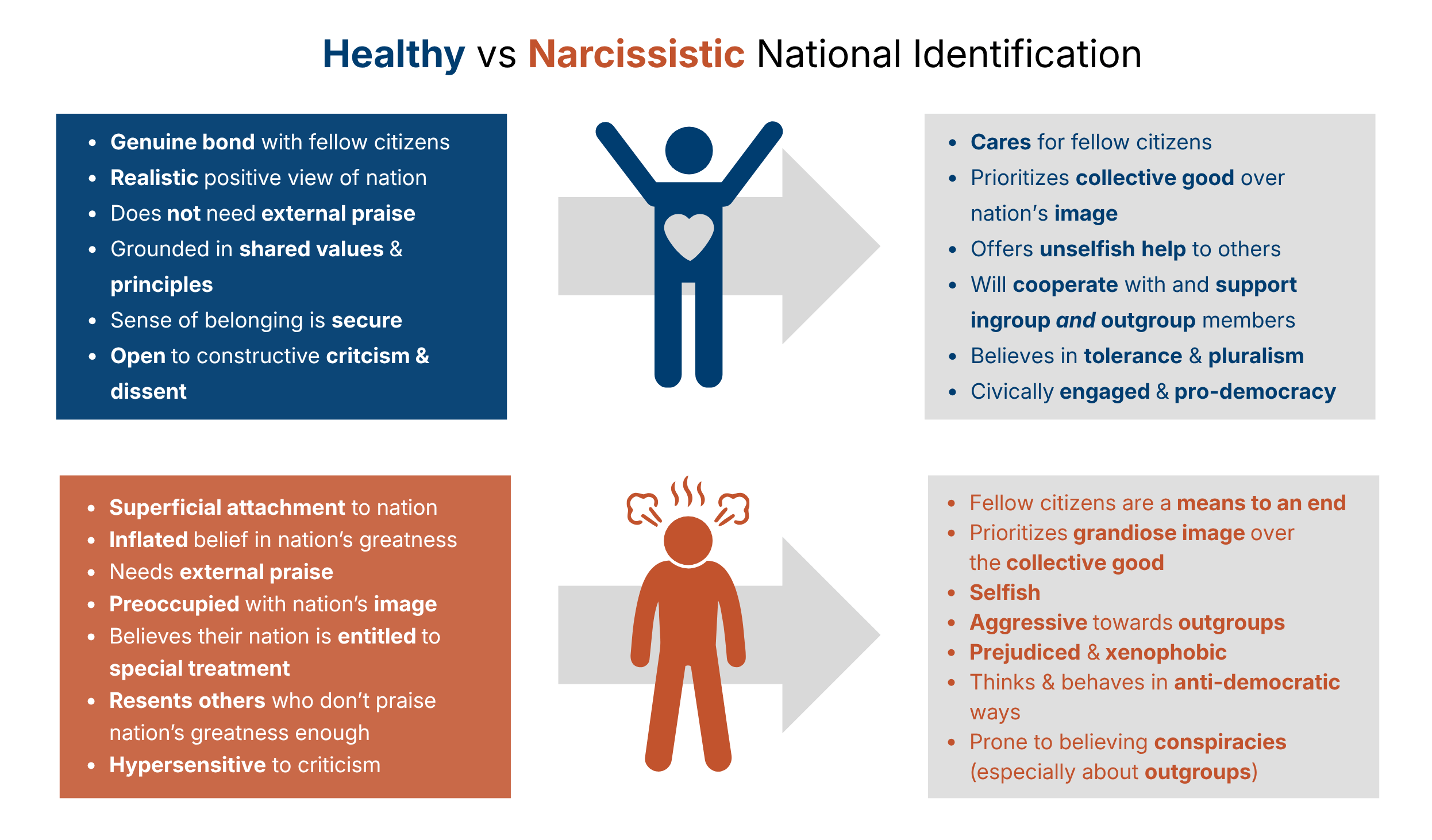
National pride can take different forms. At its best, it reflects a real bond with one’s fellow citizens and a commitment to the country’s values: a healthy, secure national identity. But national identity can also be unhealthy, superficial, and image-obsessed. A prominent example of the latter is called national narcissism.
In Caravaggio’s famous painting of Narcissus, a handsome youth who tragically falls in love with his own reflection. According to Roman poet Ovid, Narcissus is unable to tear himself away and eventually dies of his passion for himself. In an era of looksmaxxing, this doomed loop of vanity feels especially relevant.
Like Narcissus staring at his own reflection, collective narcissists* are preoccupied with their groups image. For example, national narcissists see their country as exceptional and entitled to special treatment.
Beneath the bravado is a fragile need for validation: when others fail to admire their nation enough, they become resentful. This is what differentiates them from people with a healthy national identity. They both feel attached to their own nation (as shown in the image below). But while true patriots don’t shy away from constructive criticism of their own nation, national narcissists are hypersensitive to any sort of critique and perceived disrespect.
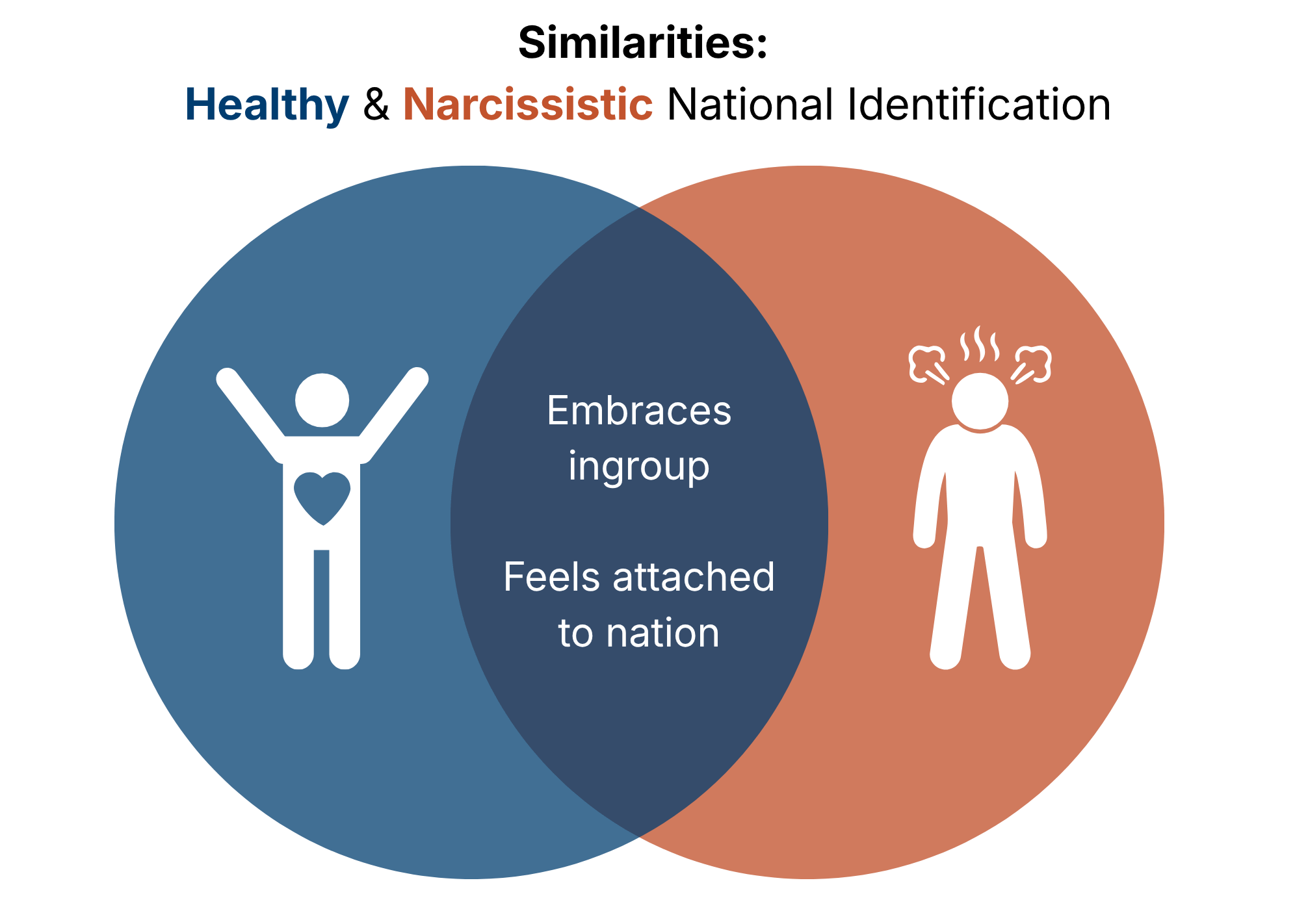
Importantly, national narcissism and healthy national identity also have some similarities. For example, both share a focus on the nation and a generally positive view of the national group. Studies find that measures of healthy and narcissistic identity are correlated (around r ~ .40). Yet when we look more closely and tease apart their defining traits, the differences are striking.
In one study, researchers asked people whether they would be willing to conspire against fellow citizens if they held power, for example, by wiretapping them or spreading false information. At first, strong national identification seemed linked to greater willingness to conspire against ingroup members—which is a bit of a shocking behavior for people who say they truly care about the group.
But here’s the twist: once the researchers disentangled the healthy form of national identification from the narcissistic one (by putting them both in the same analyses), they found that people who felt a genuine bond with their nation were actually less willing to conspire against fellow citizens. National narcissists, on the other hand, were the ones willing to wiretap and lie. In short, these types of social identity predicted the exact opposite pattern of results.
The Zeitgeist of National Narcissism
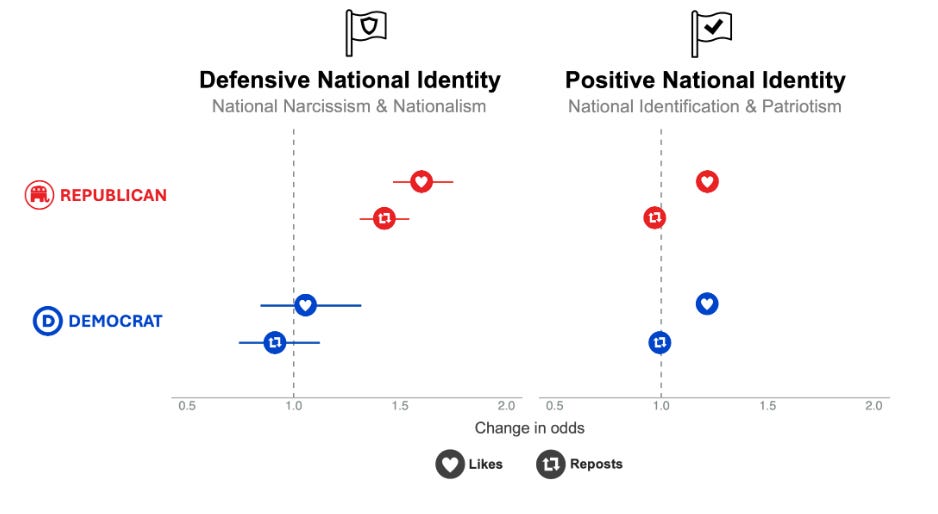
What was once a quieter undercurrent of national narcissism is now deeply woven into the fabric of American politics. In a forthcoming paper, led by Stefan Leach, Jay and colleagues analyzed 226,900 Twitter posts from members of the 117th U.S. House of Representatives (2021-2023). Social media posts expressing healthy national identity—highlighting national pride and positive feelings about America—were common across party lines and generated more likes with 98% of Republicans and 99% of Democrats expressing it at least once (although Republicans expressed it slightly more frequently). In other words, healthy identity rhetoric is generally appealing across the political spectrum.
But what about messages expressing national narcissism? Post that portrayed America as exceptional and entitled were also common (we called them defensive expressions of national identity in this paper)—particularly among Republicans. Over 75% of Republicans used national narcissistic rhetoric at least once, compared to 36% of Democrats. And those posts really resonated with their audiences: they received 60% more likes. Democrats, however, didn’t see any bump in engagement from using national narcissistic rhetoric. In fact, a follow-up study suggests this kind of language could even harm Democrats at the polls.
The rise of national narcissism, however, isn’t unique to America. We found similar patterns when we studied politicians in the UK. National narcissistic sentiment has seeped into political life across many countries and has particularly benefited right-wing populists. For example, national narcissism was linked to support for the right-wing populist Law and Justice party in Poland and to voting in favor of Brexit in the UK.
National Narcissism on Beliefs and Behaviors
As democracies around the world face growing threats, distinguishing healthy and unhealthy forms of national identity is critical. One thing many people get wrong is that the threat does not come from national identity itself. A healthy bond with one’s country can support trust, solidarity, and civic engagement. The danger comes from defensive, image-obsessed identity.
National narcissism is linked to anti-democratic behavior such as challenging legitimate elections, skepticism toward science and environmental protection efforts, greater hostility toward marginalized groups, and lower solidarity with refugees.
National narcissists are also more susceptible to conspiracy theories, particularly those targeting out-groups. We studied 56 countries and found that, in the vast majority of them, national narcissism was associated with stronger belief in COVID-19 conspiracies (see figure below). In contrast, a healthy national identification was linked to lower belief in such theories. Political ideology was completely uncorrelated with these beliefs, revealing that this is not an issue or right-wing or left-wing political beliefs. You can visit our website to see which countries score highest on the national narcissism and conspiracy theory scales.
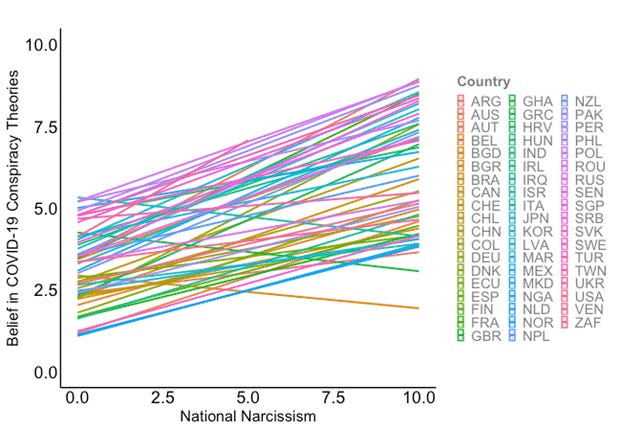
National narcissists also frequently fear getting the shorter end of the stick, even when they are objectively privileged. This helps explain why national narcissists often support pulling out of international collaborations, like the European Union. And when national narcissists perceive their country as threatened or insulted, they are also more willing to endorse extreme responses like military aggression.
The Solidarity Gap
Ultimately, national narcissism isn’t about the nation. It’s about the self. Research suggests that national narcissism may be a way by which people try to compensate for personal frustrations like feeling helpless. This can explain why national narcissists don’t just lack solidarity with out-groups, they are also quick to turn on their fellow citizens or abandon their country altogether if it benefits them.
The pandemic revealed how this can play out. While some leaders championed working together across national borders, others saw collaboration as a sign of weakness—something national narcissists can’t tolerate. In one set of studies, we found that national narcissists supported reckless public health policies during the COVID-19 pandemic when those policies helped their country save face. British national narcissists, for example, tended to oppose the EU–UK ventilator partnership, even when they knew that opting out could put fellow citizens’ health at risk.
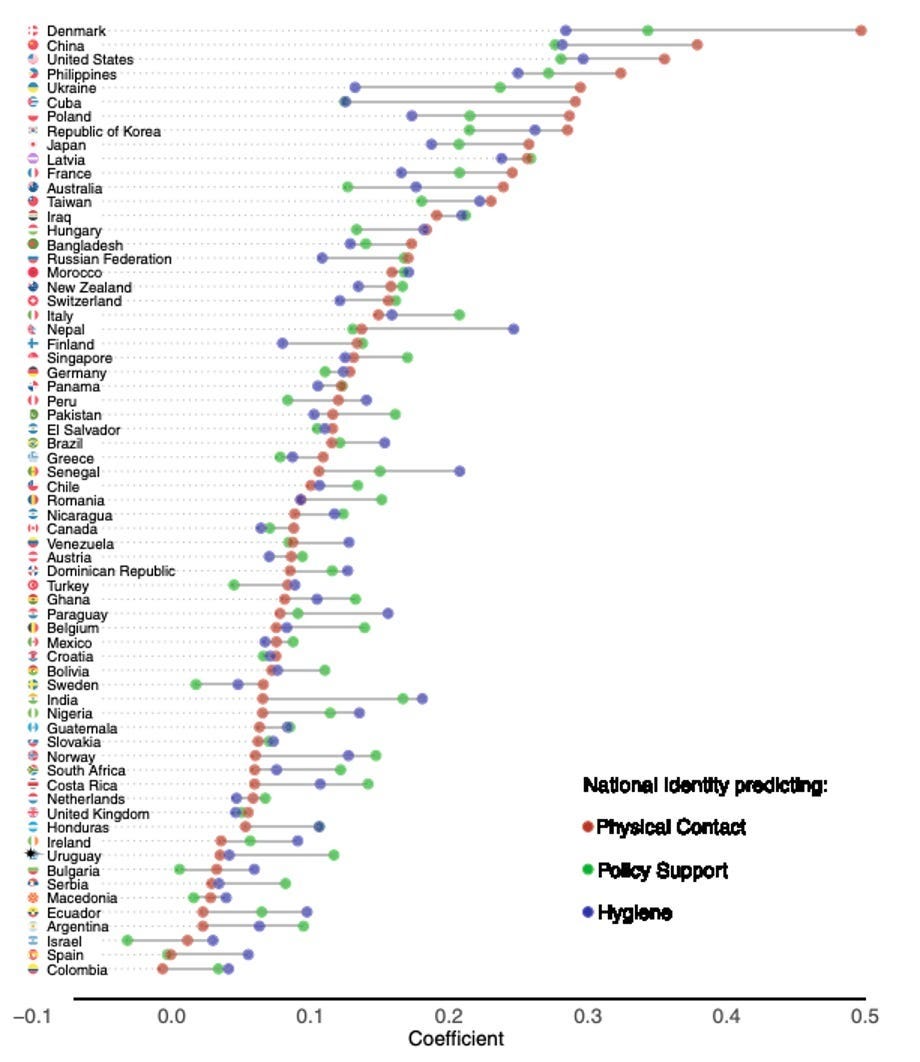
The story looks quite different for those with a healthy, secure national identity. In a study across 67 countries, we found that these individuals were more likely to adhere to public health guidelines during the COVID-19 pandemic. When people feel a genuine bond with their nation, they’re more willing to step up and make sacrifices.
Healthy, Secure National Identity Builds a Stronger Society
A strong national identity in and of itself is not problematic. Quite the contrary. Feeling a genuine bond and commitment to one’s nation can strengthen social ties and greatly benefit society. Embracing a healthy national identity can reduce polarization, foster tolerance, galvanize civic engagement, and encourage solidarity, prosocial behavior, and altruism.
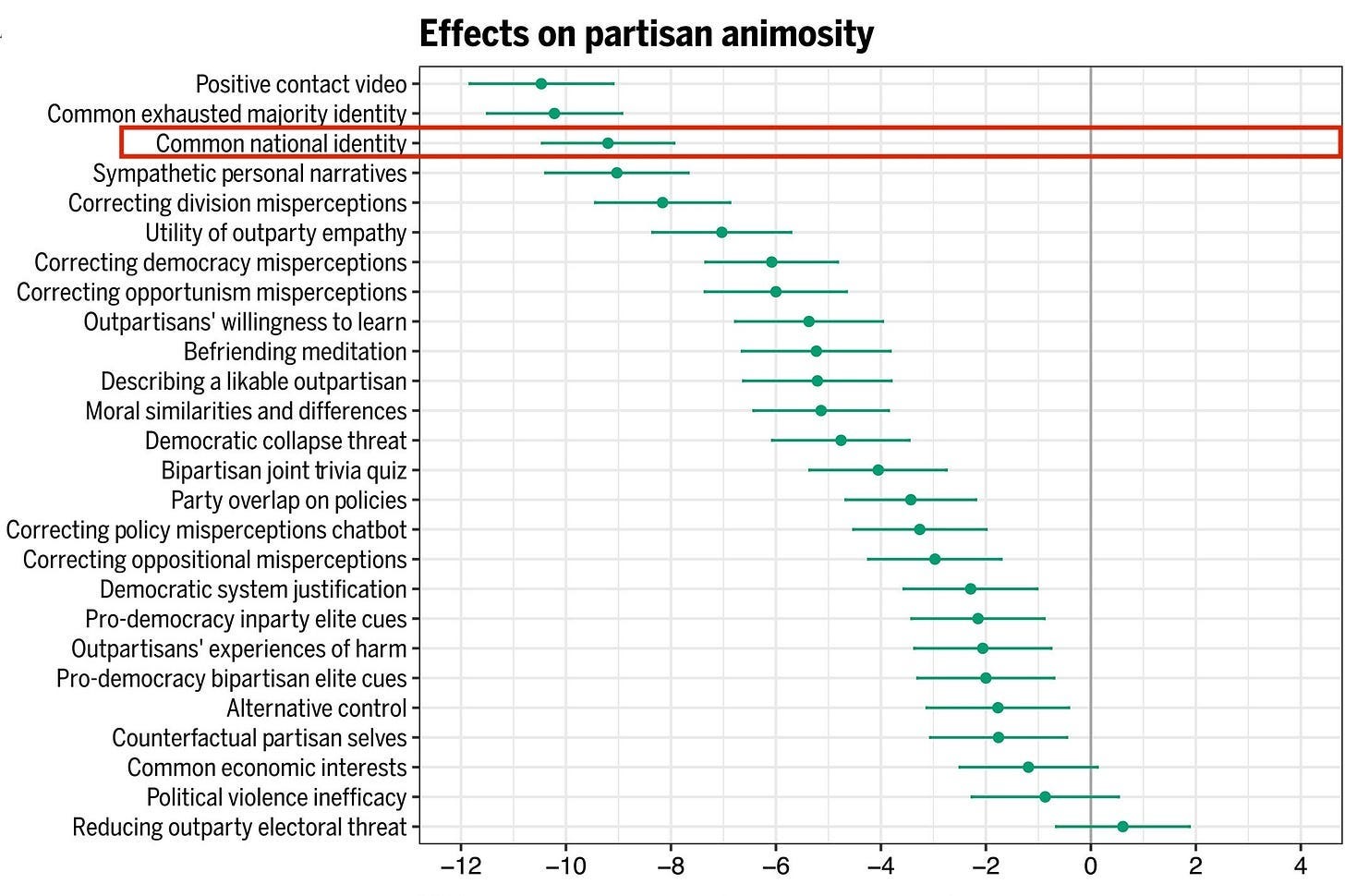
A mega-study of over 30,000 Americans tested the effectiveness of 25 interventions to reduce partisan animosity, support for undemocratic practices, and support for partisan violence. Our lab’s intervention, designed to highlight a positive, shared national identity, was the third most effective strategy at reducing partisan animosity. The effects lasted for several weeks and it also increased support for democratic practices (Voelkel et al., 2024). Reminding partisans of their shared American identity and values can be a powerful catalyst for democratic renewal.
July 4th offers Americans an opportunity to reflect not only on their nation, but on their relationship to it. Despite deep divisions over where the country is headed, the upcoming holiday is also a chance to refocus on what unites rather than divides Americans, to reaffirm shared democratic values, and to nurture a healthier form of patriotism.
Amid the politicization of the 250th anniversary, Bill Maher recently said, “Everybody has to start getting a little more excited for America’s birthday.” The deeper question is not whether Americans should feel excited for their country’s birthday, but what kind of excitement they choose to cultivate: one rooted in celebration, connection, and democratic commitment—or one rooted in grievance, status, and spectacle. How Americans understand their national identity today will help shape the country’s future.
There are lots of recent examples—from Knicks fans to the World Cup—showing how to celebrate a shared identity in the spirit of collective joy. We suggest taking a page from the Norwegians and other countries celebrating their national identity and cheering on their team together (here they are doing the Viking row in Times Square this week)!
Send us your favorite video, image or story of collective joy in the comments—we need better role models about how to celebrate in the spirite of a positive social identity.
This column was drafted by Anni Sternisko, with edits from Jay Van Bavel. Illustrations by Hannah Karsting.
*National narcissism exists on a spectrum. For brevity, we refer to people who score especially high on this spectrum as national narcissists.
Thank you for reading The Power of Us. This post is public so feel free to share it.
News and Updates
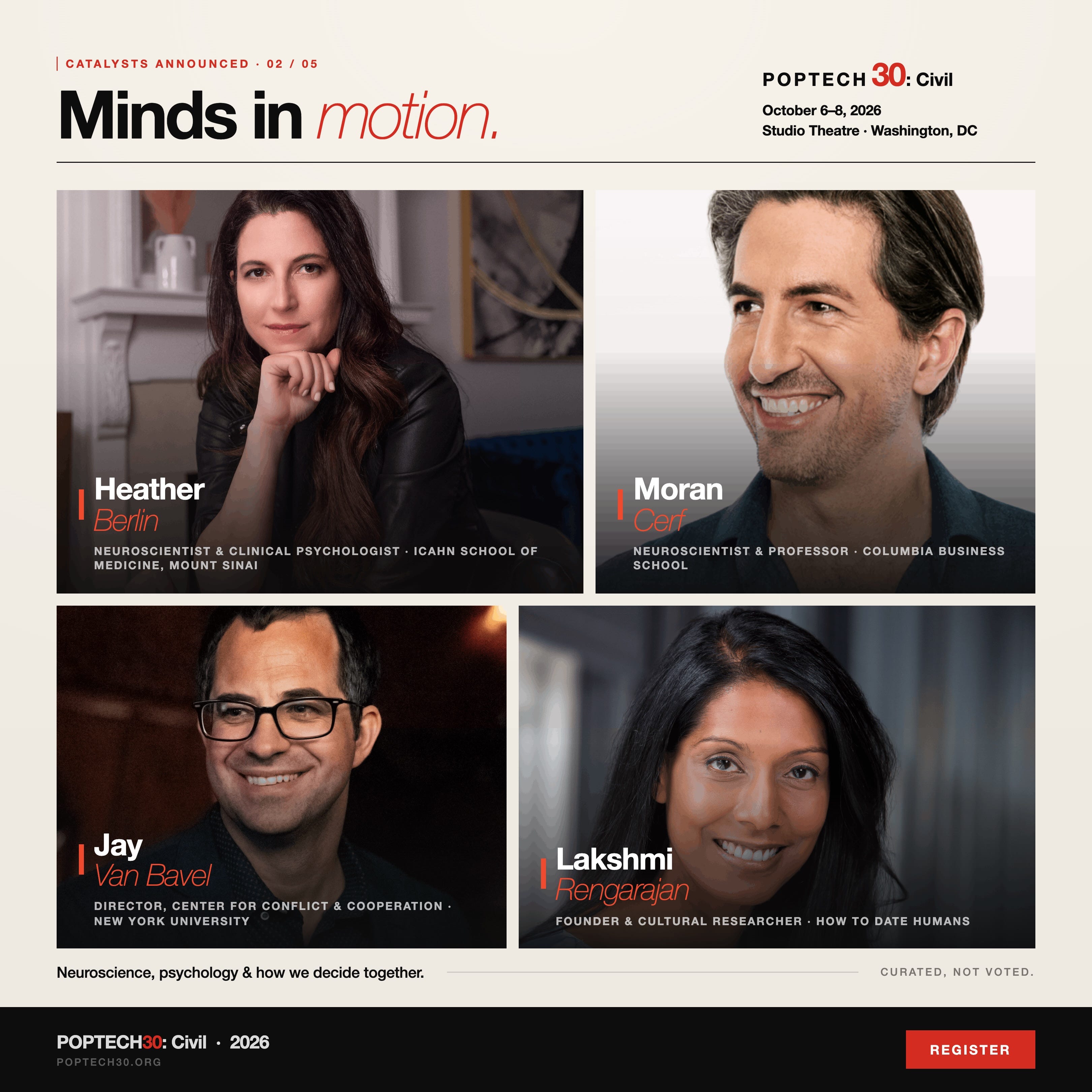
Jay will be speaking at PopTech 30 where the them is CIVIL. The event will explore how neuroscience, psychology, culture, and conflict shape the way we think, connect, and decide together on October 6–8, 2026 in Studio Theatre, Washington, DC Register at civil.poptech.org
Join us for “Ask Me Anything” sessions for summer! Premium subscribers can join us for our monthly live Q&A with Jay or Dom where you can ask us anything from workshopping research questions, career advice to opinions and recommendations on pop culture happenings. Upgrade your subscription using the button below.
Invites to RSVP have been sent via email from powerofusbook@gmail.com
June 4 @ 4:00pm EST with DomJuly 6th @ 1:00pm EST with Jay
August TBA @ EST with Dom
September 10th @ 3:00pm EST with Jay
Use our Mailbox to send us your questions
We now have a mailbox where you can send us your questions and we will share the answers in a newsletter once a month
Talk to the “Power of Us Chatbot”
We created a “Power of Us Chatbot” for subscribers. It is trained on our book and newsletter to answer any questions you have about our content and applying it to your own questions. The chatbot was created by Androw Ramy and Rémi Thériault in the Center for Conflict & Cooperation.f Let us know if you like it or have any suggestions. You’ll need to use the password: _subscriber
Catch up on the last one
We created teaching materials for educators to help explain social identity, group dynamics, and intergroup relations in a divided world.
A Syllabus for Teaching Identity in a Divided World

Teaching people about social identity, group dynamics, and intergroup relations is more important than ever. Students are living through an era of intense polarization, online conflict, generational divides, and eroding trust in institutions. So we updated our free
 | A guest post by
|
My mind while reading this
"Please be reproducable, please be reproducable"