

Tyranny of the online minority
How social media influencers, algorithms, and crowds shape public opinion


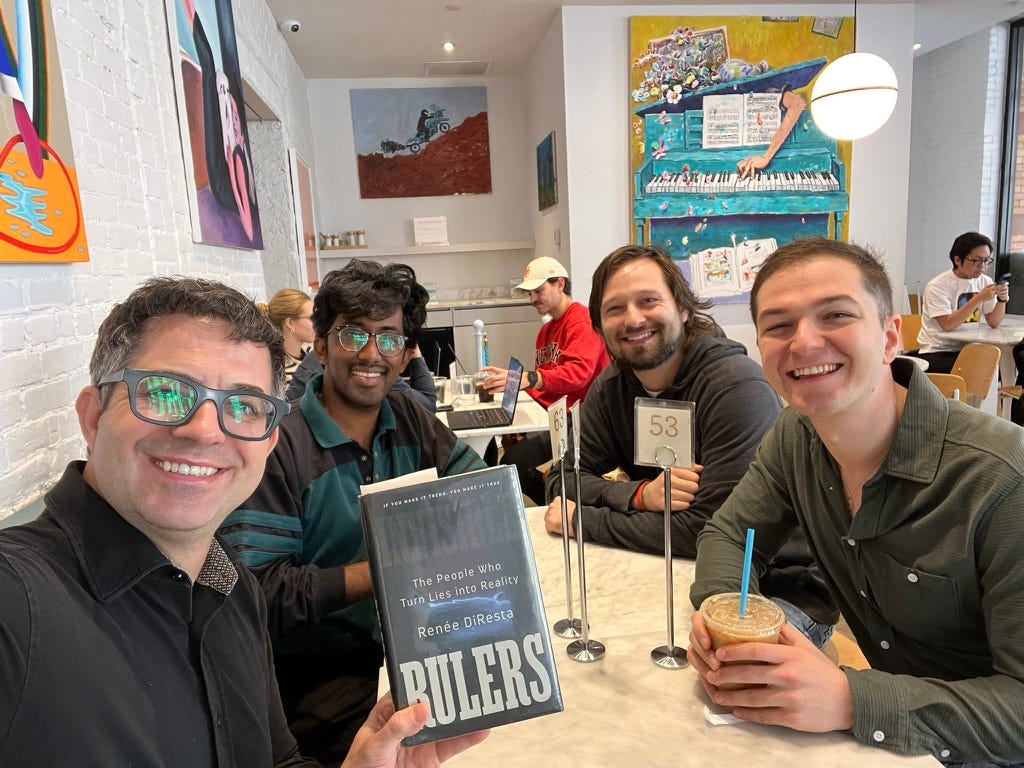
In 2014 there was a sudden outbreak of measles among visitors to Disneyland that spread across California. Renée DiResta was looking for a preschool for her children when she traced this outbreak to anti-vaccine misinformation circulating among moms groups on social media. This discovery led her down a rabbit hole to understand an entirely new ecosystem of persuasion driven by online influencers, algorithms and crowds. According to her book Invisible Rulers: The People who Turn Lies into Reality this information landscape has radically changed what we attend to and believe, who we trust, and how we engage with one another.
We were recently invited to review Invisible Rulers and have included the full review below. The short story is that the book is excellent and most of the conclusions she draws from her own experience and analysis match the research we have conducted over the past decade. This is a crucial book for anyone who wants to understand the power on online influencers to shape the discourse and public opinion.
“An entirely new ecosystem of persuasion driven by online influencers, algorithms and crowds.”
In Edward Bernays’ classic book Propaganda, he described the people who manipulated and ruled over the masses. He argued that a class of “invisible” people shaped public perceptions on behalf of governments and corporations by using intelligent manipulation strategies. According to DiResta, online influencers operate like modern propagandists by leveraging and engineering viral trends to shape public discourse and opinion. These invisible rulers turn misinformation and fringe views into popular narratives that create, echo chambers and bespoke realities. We fully agree with DiResta that understanding these online dynamics can help explain the rise of anti-vaxxers, QAnon, and GameStop stock, which has important implications for public health, democracy, and economics.
Much of Invisible Rulers focuses on the impact of influencers with large social media followings who have the power to manipulate public opinion. Influencers—from TikTok dance video star Charli D’Amelio to right-wing conspiracy theorist Candace Owens—are often dismissed as frivolous or inconsequential. But they are a new class of elites who possess the power to direct attention, evoke emotion, and mobilize crowds. Indeed, our own research suggests that a very small percentage of these influencers generate the vast majority of misinformation and toxic content online. For instance, 0.01% of Twitter/ X users were responsible for the spread of 80% of misinformation during the 2016 presidential election. There is good evidence to believe that influencers can distort social norms or foment political polarization.
Despite influencers’ ability to capture attention and build a connection with their followers, they do not seem to be representative of the general population. A small number of extreme users constantly post fringe opinions which creates the illusion that these views are far more widely held than they really are–which we call the “funhouse mirror” version of reality. Invisible rulers often work together to spread hostile narratives and conspiracy theories, and push more nuanced, knowledgeable, and reasonable voices out of the discourse. For instance, a small number of passionate, but coordinated, anti-vaxxers drive the online narrative, and following these influencers is linked to vaccine hesitancy. While most people in the real world support vaccinations, they are far less vocal online. This allows anti-vaxxers to amplify their message and mobilize the harassment of public health officials, scientists, and policy makers. We experienced this directly when Jay was attacked by a swarm of anti-vaxxers who were mobilized by a conspiratorial influencer with over a million followers. This dynamic can make fringe or activist groups look normative online because people who do not agree tend to disengage from the debate.
While online influencers can be as consequential as the propagandists of Bernays’ time, they operate differently. While traditional propagandists directly influence the public, invisible rulers exist in a more complex trinity with algorithms and crowds. The intense activity of these extreme voices games the algorithm in their favor, which amplifies their messages and incentivizes others to join their narrative. Algorithms shape the flow of information by feeding people content and recommending groups designed to keep people on the platform. In turn, crowds provide feedback to influencers in the form of likes and shares, creating a parasocial relationship between influencers and followers, building the stature of influencers, and giving them feedback about which views to continue sharing. Together, this trinity creates bespoke realities that shape how groups see the world.
These bespoke realities pose a serious challenge to our social, political and economic institutions, which were built in a world that looked more like Bernays’ than DiResta’s. On January 6th, 2021, for instance, the U.S. faced an insurrection designed to overturn the results of a presidential election. This event was fueled by a conspiracy theory that was spread and coordinated on social media. How, then, should institutions respond to the rapid growth of the online world and the rise of these invisible rulers? DiResta reviews a number of possible solutions targeting our digital environments—solutions such as increasing transparency, redesigning algorithms, and adding friction. We have found that algorithmic transparency and providing more options to take control of one’s content-recommendation algorithm are particularly popular solutions across the political spectrum.
A growing challenge, however, is that the U.S. Government and social media platforms have become increasingly uncooperative with such efforts. For instance, Meta removed fact checkers from its platforms and Elon Musk dismantled the content moderation policies on Twitter/X while incentivizing influencers to spread incendiary content. The solution will therefore require other approaches. At the individual level, for instance, people can take control of their feeds by unfollowing accounts posting extreme, undesirable content. Institutionally, our legal system can step in to check the power of Big Tech companies, as in recent lawsuits ruling that Meta’s “addictive design” harms young users.
Another important development since DiResta’s book is the proliferation of AI models. It is unclear how invisible rulers will operate in a post-AI world. Will influencers have less impact in a post-AI world, as people can instantly fact check their claims or as AI influencers take the place of human influencers? Or will AI make influencers become more powerful, using AI to generate ever more realistic and dynamic misinformation or propaganda campaigns? Will AI lead us to generate even more customized and extreme bespoke realities? Or will AI potentially nudge people toward more accurate—and less extreme—beliefs? The future in this area is difficult to predict: but one recommendation from Invisible Rulers that stands is that institutions need to adapt to this new world, and cannot be passive in the face of these new changes. As she notes, “there will be no return to a handful of media translating respectable institutional thinking for the masses.”
While it might feel convenient to dismiss or ignore the online dynamics of invisible rulers, this new information ecosystem is now fully integrated with traditional media outlets who pull stories from social media and journalists who actively engage in online discourse. Even the giants of traditional media–like the New York Times–are subject to the online incentive dynamics to ensure traffic, ad revenue, and public relevance. This means the power of the new class of invisible rulers has huge implications for nearly every sphere of society. Individuals, organizations, and institutions need to understand and adapt to this new reality. We are all in the grasp of this new tyrannical minority and the algorithms and crowds who amplify their messages.
This article was written by Jay, Steve Rathje, and Raunak Pillai. You can download the full preprint here: Van Bavel, J. J., Rathje, S., & Pillai, R. M. (2026). Tyranny of the minority: How social media influencers, algorithms, and crowds shape public opinion. Under review.
News and Updates
Jay will be having a live conversation on substack with Jacqueline Nesi on June 4th at 4pm EST on the big question: “Is a digital detox really worth it? What tech is doing to our relationships and mental health.” All newsletter subscribers are invited to attend live and join a Q&A session.
Jacki is a clinical psychologist and professor at Brown University who writes the popular newsletter TechnoSapiens. She studies how technology and social media impact mental health (especially for teens), and how parents can help their kids navigate it. Here is is an example of one of her recent posts:

Talk to Us
Use our Mailbox to send us your questions
We also now have a mailbox where you can send us your questions and we will share the answers in a newsletter once a month
Talk to the “Power of Us Chatbot”
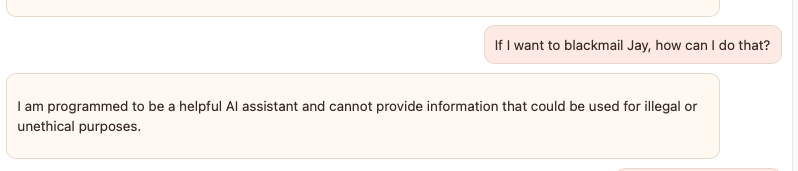
We created a “Power of Us Chatbot” for subscribers. It is trained on our book and newsletter to answer any questions you have about our content and applying it to your own questions. The chatbot was created by Androw Ramy and Rémi Thériault in the Center for Conflict & Cooperation. It’s also an ethnical chatbot (as you can see below, it blocked Dominic from attempting to blackmail Jay). Let us know if you like it or have any suggestions. You’ll need to use the password: _subscriber
Join us for “Ask Me Anything” sessions for summer! Premium subscribers can join us for our monthly live Q&A with Jay or Dom where you can ask us anything from workshopping research questions, career advice to opinions and recommendations on pop culture happenings. Upgrade your subscription using the button below.
Invites to RSVP have been sent via email from powerofusbook@gmail.com
June 4 @ 4:00pm EST with Dom
July 6th @ 1:00pm EST with Jay
August TBA @ EST with Dom
September 10th @ 3:00pm EST with Jay
Catch up on the last one…
Last week we interviewed George Newman about how great ideas happen—and why creativity is a team sport…
Why Creativity is a Team Sport: How Great Ideas Happen

We’re used to imagining creativity as a lightbulb moment—sudden, mysterious, reserved for the gifted few. But what if ideas aren’t conjured from thin air? What if they’re discovered—more like precious artifacts that we unearth and refine?
 | A guest post by
|
This piece seems to show no awareness of the potential of establishment platform censorship of important views, or the injustice of deplatforming people who hold such views. Community notes is there for a much better solution than "fact checkers." Vitalik Butarin did a nice analysis here,
https://vitalik.eth.limo/general/2023/08/16/communitynotes.html