

The Roots of Goodness
Ervin Staub survived the Holocaust—and spent a lifetime studying how kindness can take hold.

This week we are sharing a discussion of psychologist Ervin Staub, a Holocaust survivor who spent his career asking one of the most important questions in social psychology: how cruelty takes hold — and whether kindness can, too. It clearly articulates a theme we return to often: goodness isn’t just a trait — it’s a set of conditions, norms, and practices we can build.
We met Ervin at our very first conference together as graduate students. He was a key speaker at a conference on “Why neighbors kill” in London, Ontario. We hopped on the train and were some of the only students from outside the area who attended the event. We both cornered Ervin and discussed the origins of intergroup violence and he was incredibly gracious and patient with two young, inquisitive graduate students.
“He has studied a simple question with vast consequences: how to be good in bad times and encourage altruism in the face of evil.”
This post was originally published on Psyche and authored by Michael Bond. If you like this essay, consider subscribing to Psyche/Aeon as well — few outlets do long-form psychology writing this well.
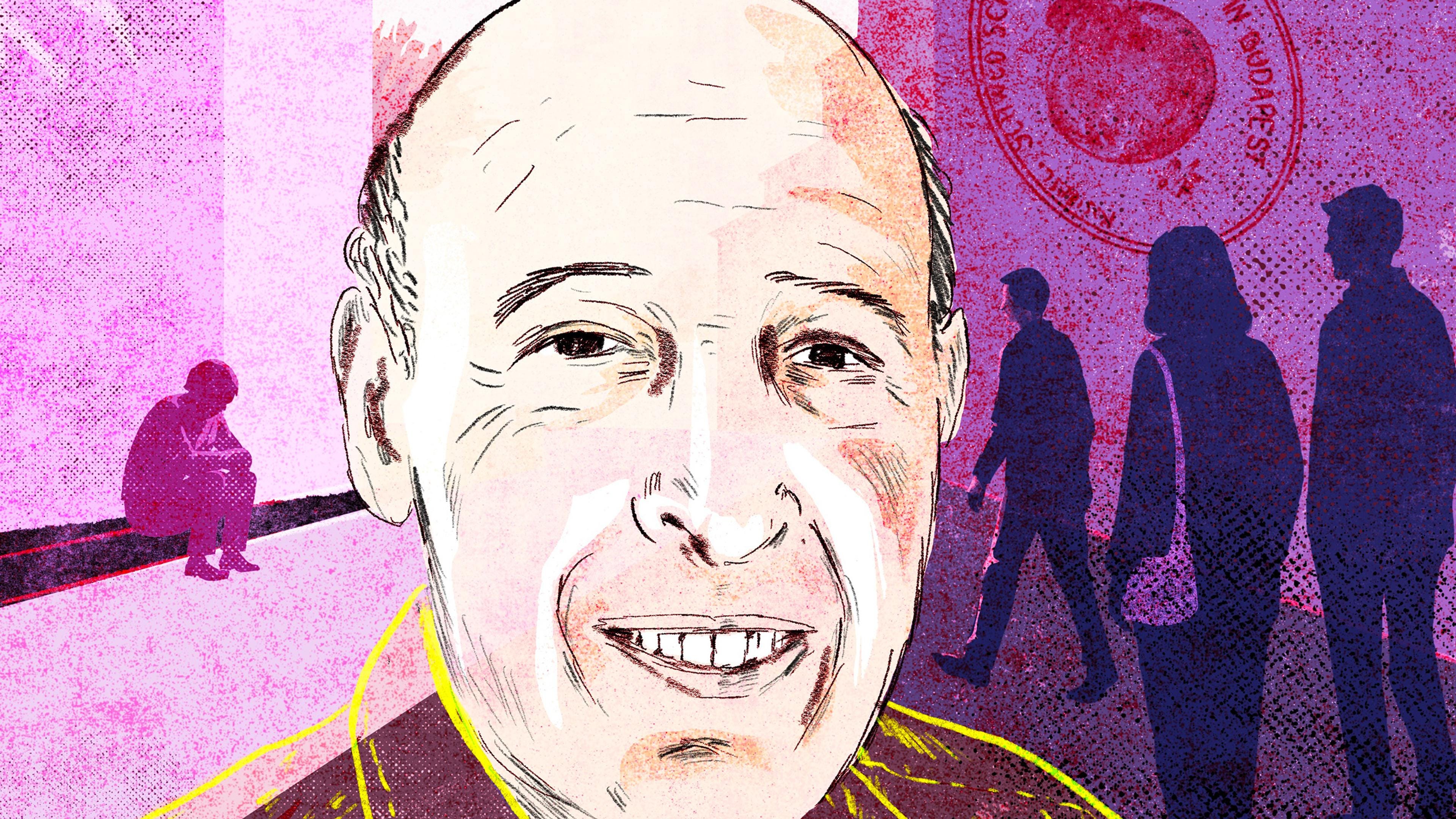
Many of us want to make the world a better place. It would be hard to find someone more invested in how to go about it than the Hungarian American psychologist Ervin Staub. He has spent his life examining a simple question with vast consequences: how to be good in bad times and encourage altruism in the face of evil. Unusually, he has studied the subject as an academic while also living it close at hand. As a boy in Hungary during the Second World War, he experienced greater extremes of depravity and heroism than most of us face in a lifetime. ‘Sadness and grief well up in me at unexpected moments, when I encounter reminders of the terrible things that were done to other people,’ he writes in his memoir. Yet he remains optimistic about people’s capacity for goodness. ‘I learned … that life does not have to be what the Nazis made it, that there is love in the world, as well as caring and the willingness for self-sacrifice.’
Spring 1944 was a fraught time for all Hungarian Jews, hundreds of thousands of whom were being transported to Auschwitz and other camps. The Nazis had arrived in Budapest – ‘the same Nazis who lined up people on the edge of the Danube, maybe three or four, shot a couple of them, tied them together and pushed all of them into the river,’ says Staub. His first clear memory, aged five or six, is waking in his home in Budapest and hearing noises in the room next door. ‘I have become pretty good at feeling my feelings, but I am not that good at feeling my feelings from that point in time,’ he says. Though he remembers clearly what happened next: ‘I went into the other room. Some people in the family were crying. I was looking at my uncle, who had a rucksack and this pink piece of paper, which was his call-up. And then we said goodbye to him, and that was the last time any of us saw him. Except one person.’
That person was Maria Gogan, a Christian woman who cared for Staub and his sister and three of his cousins throughout their childhood. He describes her as ‘a hero in every possible way’ and the inspiration for much of his work. She visited his uncle in the labour camp and smuggled him one of the letters of protection that the Swedish diplomat Raoul Wallenberg had devised to shield Hungarian Jews from the Nazis by granting them de facto Swedish citizenship. (Although it failed in his uncle’s case, Wallenberg’s ruse saved the lives of thousands of Jews, including several of Staub’s immediate family.) Maria helped the family, at great risk to herself, throughout the rest of the war. ‘She took me and my sister into hiding with a Christian family,’ explains Staub, ‘which I remember quite well, going there and going into the apartment.’ When some of the neighbours began to suspect that they were Jewish, Maria moved them to one of Wallenberg’s protected houses. Staub remembers it being packed with Jewish families. ‘People were lying on mattresses in the basement, which was how we started off. Maria started to make bread out of dough, push it in a baby carriage to a bakery, have it baked, pick it up and bring it back, not only for us but also for other people in the house. At some point she was stopped by Hungarian Nazis, and they made her stand with her hands to the wall for a very long time, saying we are going to kill you because you are helping Jews … The next day she was taking bread to the bakery again.’
Years later, when Staub was 18, Maria accompanied him to the Hungarian border during his escape to the West. He recalls that they said goodbye to each other while sitting in a haystack. ‘It was such a wonderful, loving goodbye.’ Since then, he has thought a great deal about her kindness and how she came to be that way. ‘Her mother died. Her father married the fairytale really bad stepmother. For any little thing that her stepmother thought she did wrong, she made her kneel on dried corn, which apparently is quite painful. So she had a very bad history there.’ But from an early age, Maria was hired out to families to care for their children, and with them she experienced something entirely different. ‘She loved the children and the children loved her. And I think that it enabled her to have what I later came to call altruism born of suffering. People who suffer often go on to become violent. But some have experiences that transform that suffering into wanting to protect and help others … [They undergo] an emotional transformation, the realisation that the world does not have to be like this person made it for me, that there are other people who are kind and caring … I think that was very apparent in her case. In all my life – and I spent a lot of time with her from birth to age 18 – and then during my visits, I never saw her do an unkind act, or say unkind things to another person. How many people can you say that about?’
Staub believes that the community he grew up in, in an environment fraught with risk, has shaped his entire life. ‘In the midst of all those horrors I was lucky … I was surrounded by people who loved me and cared for me and did everything they could to protect me.’ (Their dedication may explain his acknowledgement that he ‘was not particularly conscious of pain that I carried from my childhood’). More than anything, they ‘so powerfully expressed values in action’, giving him a touchstone to return to for the rest of his life. He credits Maria’s selflessness, Wallenberg’s heroism and the courage of his mother and aunt not only for his survival, but for his moral outlook, and even his decision to study altruism.
Was there ever a danger, in that extremely hostile setting, that he might have grown in another direction? ‘Possibly I could have chosen a different path,’ he says. He knows others who did, though their home lives were far less nurturing. He has a friend, another survivor of the Holocaust, whose parents sent him to a monastery during the war for his own safety, ‘a Jewish kid among Christian kids’. At the end of the war, no one came to pick him up until weeks afterwards. ‘He asked me at some point, what is the one sentence with which you would summarise your experience of the Holocaust. His sentence was something like, people can be very cruel and you have to do everything you can to defend yourself. My sentence was, even in the worst of times, people can be caring and helpful.’
Some of Staub’s enduring values, and the seeds of his life’s work, are plain to see in his first published papers. In the late 1960s, when he was assistant professor of psychology at Harvard University, the social psychology topic du jour was the counterintuitive finding that people are far less likely to help in an emergency when others are present, a phenomenon known as the bystander effect. Unlike most in his field, Staub was more interested in the people who helped than those who turned away. ‘I wanted to increase caring, helping and goodness so that the terrible things I experienced and increasingly encountered in my work (and saw in the world) would not happen,’ he explains.
In 1970, he built his own series of studies to find out how helping behaviour varied with age. He recruited 232 kindergarten and elementary school children and took them singly or in pairs to a room at the university where they were told they would be taking part in a drawing project. This was a ruse to distract them from the real objective, which was to see how they reacted when a researcher in the next-door room played a recording of a child crying (a scenario, he points out, uncannily reminiscent of his earliest childhood memory). Just as he suspected, the older the child, the more likely they were to investigate the sounds of distress – but this pattern held only until around the age of nine. After that, he found ‘a shocking decrease’ in the extent to which the children would help, back down to the level of kindergarten children. They made excuses such as: ‘If I went in there I might get yelled at’ or ‘I thought I should stay here.’ They’d learned to fear disapproval, he says, something the younger children were apparently immune to.
What Staub remembers most vividly about this set of studies is an incident during a later round in which 12-year-old children had been told they could go into the other room if they needed more drawing pencils. He was watching, through a one-way mirror, a girl who had been listening to the crying for a while and not doing anything. ‘I think, she’s not going to [act] because usually people act early,’ he recalls. But then ‘she jumps up, takes her drawing pencils, breaks the edge off both of them and runs into the other room. So she had to fulfil the conditions of the permission before she went in.’ Staub concluded it was important to teach children that ‘under certain circumstances, for example, when someone needs help, the usual behavioural restrictions do not apply.’ (In a later study, 82 per cent of the children who were given permission ended up helping.)
‘Even people who have grown up in a hostile environment can become caring and helpful’
Despite the particular experience of his childhood, it was not obvious to Staub as a young psychologist that he would spend the greater part of his academic career trying to answer the question at the heart of these studies: why, or under which conditions, do some do good while others look away? In his memoir, Evil, Goodness, and Creating Active Bystandership (2026), he notes that, while at Harvard, he thought little about the connection between his research and his life. ‘For a number of years, I think I did my best to separate the work I was doing from my life experience, albeit unconsciously … Perhaps, also, I was not yet ready to engage emotionally with my early experience … My mode of engagement was, instead, intellectual, but it eventually opened me up emotionally.’ He was, he tells me, simply putting one foot in front of another. ‘I never planned out my way. I was doing what seemed meaningful and valuable.’
At the same time, he sought out people whose lives or work were directly relevant to his own. One of them was Perry London, a visiting professor at Stanford University who was the first to study rescuers – Christians who risked their lives to save Jews in occupied Europe. Staub was intrigued by London’s finding that rescuers shared at least three characteristics. They were adventurous, a correlate to courage. They were socially marginalised – a Catholic living among Protestants, for example – which made it easier for them to defy social norms. Most significantly, they had inherited from their parents a strong moral code that highlighted their responsibility towards others. ‘Perry’s study kind of pushed a switch in me,’ says Staub. ‘I thought, I can study this too.’
Staub’s experiments with children and adults at Harvard and later at the University of Massachusetts would make it clear to him that altruistic behaviour cannot directly be predicted from a person’s personality traits, a common misperception even today. Neither does he think it emerges spontaneously from the dynamics of a situation. Rather, he has found that it stems from the culture or family in which a person grew up – what they have seen others do, or the values those around them have lived by. ‘Even people who have grown up in a hostile environment can become caring and helpful,’ he insists. ‘But there has to be at least one person in their lives who can provide a contrast, and with whom they have a connection. So a child growing up in an abusive family with a father who tells him that he should respond to any challenge with force and aggression cannot grow up that way [caring and helpful]. Research shows that children who grow up in these circumstances will end up in prison for aggression. There have to be experiences that give them a glimmer at least of a different possibility.’
For all his commitment to altruism, Staub’s best-known, most successful and most widely reviewed work is his book The Roots of Evil (1989), an investigation into the psychological motivations and cultural conditions that lead to genocide and inter-group violence. The book arose from his decision, late in the day, to address his turbulent childhood under the Nazis, a subject that he had largely avoided. Up to that point, ‘it was as though my personal and professional lives were running on parallel tracks’. The two finally came together around 1980 when Staub started reading Lucy Dawidowicz’s analysis of the Holocaust, The War Against the Jews, 1933-1945 (1975). ‘As I was reading it, I had the feeling that based on some of my work on altruism and helping behaviour … I have some beginning [of an] understanding of how such a horror could happen,’ he says. He saw that altruism and evil were interrelated. ‘In both cases there is an evolution.’ Just as children learn to be helpful by engaging in helpful acts, perpetrators of violence become accustomed to their harmful behaviour. ‘That is, learning by doing can change people in either positive or negative directions.’ In The Roots of Evil, he offers an alternative perspective to the popular idea that terrible acts are committed by terrible people.
Under extremely difficult life conditions certain motives dominate, Staub writes, among them ‘protecting the physical wellbeing of oneself and one’s family and preserving one’s psychological self, including self-concept and values.’ But it’s hard to accomplish all this by improving the material conditions of life. Instead, people may try to cope psychologically, often by ‘devaluing other groups, scapegoating … and adopting ideologies’ in ways that promote and do not inhibit harm.
While working on The Roots of Evil, Staub began to think for the first time about his father’s experience during the Holocaust. Like his uncle, his father was sent to a forced labour camp (unlike his uncle, he survived). Staub wondered what it was like for his father in the camp and during his eventual escape, events he’d never spoken about. He thought about the terror his father must have felt when Hungarian Nazis searched their house in Budapest while he hid behind a chair. ‘I rarely, if ever, cried about my life,’ he says. ‘But I did cry about my parents’ life. What a life.’
During 1989 – the year The Roots of Evil was published – Afghanistan, Sri Lanka and Angola were embroiled in civil wars, South Africa remained under apartheid, and (on 4 June) the Chinese government massacred hundreds of student protesters in Tiananmen Square. It was also the year that communism collapsed in eastern Europe after more than three decades of repression. There was an urgent need to understand the dynamics of mass violence. Staub hoped that politicians and others would use his work to try to prevent the churn of brutality and, specifically, help societies ‘resist influences that turn us against each other’, as he puts it in The Roots of Evil. ‘Well, that didn’t happen,’ he recalls. ‘I felt that nobody was doing anything. I was deeply discouraged because I had the delusion that, having identified what leads to great violence, there will be actions in the world to prevent it. But violence continued.’ At that point, ‘I thought it might be … constructive if I began to take some kind of action myself.’ (Elsewhere, Staub has said of this decision: ‘In a world of suffering, for me, being actively engaged in trying to help was redemptive.’)
The opportunity came soon enough. In 1994, Hutu extremists in Rwanda instigated one of the most horrific campaigns of violence since the Holocaust, against the country’s Tutsi minority. Up to a million people were killed, many of them by their neighbours, in just 100 days. In the months that followed, Staub began to think about how he might contribute to the country’s recovery. He organised an international conference on the prevention of genocide, at which academics, community leaders and policymakers discussed the pathways to violence and examined evidence from a number of conflict zones such as Rwanda, Bosnia and Tibet (the Dalai Lama was the conference’s principal speaker). The event led to a commitment, backed by a grant from the John Templeton Foundation, for Staub to travel to Rwanda to help promote healing, forgiveness and reconciliation among the traumatised population. Stepping off the plane in Kigali in January 1999, he had little conception how deep his involvement would be.
His partner in Rwanda was his partner in life: the clinical psychologist and trauma specialist Laurie Anne Pearlman. The two of them had met in the early 1990s at an academic conference on trauma and violence where he gave the opening address and she the closing one (they are known affectionately by friends as Mrs Trauma and Mr Violence). Over lunch at their house in Massachusetts, Pearlman tells me that after the conference she checked out Staub’s book The Roots of Evil to make sure he’d used the word ‘evil’ appropriately (as a description of an act rather than an individual). Reassured, she met him for a walk, and they began dating. Thirty-three years later, their easy teasing and tender mutual affection give the impression they still are. They share a great deal, including the desire to make a difference beyond their academic and therapeutic practices. Pearlman says that at the time she met Staub she was ‘sitting in these little rooms helping one person at a time. What the heck! While I’m sitting here for 50 minutes with this person how many people are newly traumatised? So I decided I needed to do something to help people on a larger scale.’
‘Killing your neighbour with a machete is different from what went on in the Holocaust … it expanded my framework but didn’t disrupt it’
Staub’s decision to visit Rwanda, a country in the aftermath of genocide, was bound to be problematic. ‘I am a Holocaust survivor after all.’ The night before they travelled, he had nightmares, one of them a recurring dream relating to the time he escaped from Hungary. ‘I dreamed that I was running through a beautiful green forest and soldiers were chasing me,’ he recalls. ‘I’ve had this nightmare a small number of times.’ He was fortunate to be travelling with Pearlman, who specialises in vicarious trauma – the negative effects of treating other people’s distress. ‘There was one very valuable element for us and that is we were together,’ says Staub. ‘So we could talk about things, we could support each other. I think that was very valuable in terms of mitigating some of what we encountered.’
Nevertheless, the two of them found the experience heart-wrenching and agonising. Staub recalls being shocked at the contrast between the beauty of the landscape (‘green fields, rolling hills, lakes, and valleys’) and the horrors of what happened there.
‘Everybody we saw just seemed depressed, quiet, withdrawn, looking down, there was no feeling of joy, no feeling of community or connection,’ says Pearlman, even though four and a half years had passed since the genocide. Staub thought people looked frozen. ‘There were two or three people sitting here or there, not necessarily talking to each other, just sitting there. There was no kind of flow to life.’
They were witnessing the fallout of an extraordinary situation in which ethnic loyalties were elevated over family ties. Parents had killed their children and husbands their wives. Staub says he found this kind of behaviour ‘totally astonishing’ and ‘almost incomprehensible’. Yet their long experience as psychologists specialising in trauma and violence had given them a framework that helped them make sense of it. ‘We already knew about genocide and what happens,’ says Pearlman.
‘Of course, killing your next-door neighbour or your spouse with a machete is different from what went on in the camps in the Holocaust … I would say it expanded my framework but didn’t disrupt it because already both of us had come to understand the horrors of which people are capable.’
Traumatic experiences can corrupt people’s capacity to have functional relationships and live normal lives
During the summer of 1999, they began sharing their insights into trauma and reconciliation with political leaders, community organisations, journalists and others. In workshops and training sessions, they addressed the subjects that all Rwandans seemed desperate to discuss: the origins of genocide, the psychological impact on survivors, the path to reconciliation, and how to prevent it happening again. Staub recalls that people were relieved to learn genocide is not an inevitable consequence of the human condition, that it is made more likely by a particular set of conditions: political chaos, a long history of conflict, group discrimination, a lingering sense of grievance, and a strongly hierarchical society.
‘Horrendous situations can lead to horrendous behaviours,’ he explains. ‘Because under those circumstances what are people to do? … Everything has collapsed, everything is terrible, people are killing me, killing everybody around me. So people can lose whatever moral compass they may have had … This wasn’t the will of God. People created it and it’s understandable how it came about. That was one of the important elements for us, to understand how it came about. Even the people who did some terrible things you wouldn’t necessarily think of as evil, you would think of as powerfully affected by circumstances. When a whole group of your fellow ethnics are doing these terrible things, it’s very difficult to deviate. If you deviate you might be killed. You are powerfully part of the group.’
The workshops exposed Staub and Pearlman to many stories of tragic loss suffered by Tutsis who survived. Staub remembers, in particular, a woman whose husband had been taken away by Hutu militia. She described to them how a member of the militia, a family acquaintance, sent a Hutu man to her house to protect her. ‘He arrived at the house with a Bible under his arm, stayed in one of the rooms, and when more killers came to the door, he faced them off and saved this woman,’ relates Staub. When the genocide ended, this man escaped from Rwanda, along with many other Hutus. Then a few years later, he came back to visit the woman he had protected. But instead of welcoming him, she decided she couldn’t trust him. ‘This woman said about the person who saved her life, he was a Hutu, I cannot protect myself from him, I can go to the authorities,’ laments Staub. ‘I mean this person saved your life! He stayed with you. He never harassed you.’ For Staub it was a reminder of how traumatic experiences can corrupt people’s capacity to have functional relationships and live normal lives. ‘Isn’t the damage that is done to people just totally flabbergasting?’
In 2004, the reach of their work in Rwanda expanded dramatically with the launch of an educational radio drama, Musekeweya (meaning ‘New Dawn’), which incorporated the key messages from their workshops into a soap opera about two fictional villages in conflict. An evaluation found that people who listened to the drama (a recent poll suggests that 76 per cent of the population tune in every week) were more likely to speak their minds, express controversial views and make decisions independently of authority; they were also likelier to empathise and reconcile with other groups of Rwandans, all of which, according to Staub, would make a return to violence less probable. In 2006, variations of Musekeweya began broadcasting in Burundi and the Democratic Republic of the Congo; all three dramas continue to this day. All the evidence suggests that Staub and Pearlman have made a real difference. At the very least, they have helped increase the prospects for peace in what has been an extremely unsettled region. ‘As Laurie liked to say, we were just two little peanuts,’ says Staub. ‘It was true, we were just little peanuts. But we were active peanuts.’
One of the key messages of the Rwanda workshops – that people have power to intervene for the good of others (to become ‘active bystanders’) – has been conspicuous in almost all Staub’s real-world engagements, most notably the one that has come to define his legacy in the United States: training police officers in ‘ethical policing’. California’s police department asked for his help after a number of its officers were filmed beating Rodney King as he lay on the ground after a car chase in Los Angeles in March 1991. Staub developed a training programme that encouraged officers to step in whenever a colleague looked like they were becoming overly aggressive towards a civilian, an approach that directly challenged the traditional police culture of allegiance and unity.
While it is unclear whether California ever implemented his recommendations, the principle of active bystandership as a way to reduce brutality was taken up by activists pushing for police reform elsewhere. In 2014, a group of lawyers, civil rights activists and retired and serving police officers in New Orleans began adapting Staub’s recommendations for the city’s police department (the NOPD), which has a long and troubled history of violence towards the community it serves. The previous year, the NOPD had been placed under a federal supervision order, forcing it to introduce extensive reforms. One of the outcomes was that Staub’s active bystandership training – known as Ethical Policing is Courageous (EPIC) – became mandatory for all New Orleans police officers. EPIC has helped reduce the number of aggressive interventions by police in cases of public disorder and has played a critical role in improving police-community relations. As a result of this achievement, some 430 law-enforcement agencies across the US – including those in New York, Los Angeles, Chicago, Dallas, Washington, DC, Boston, Denver and Philadelphia – have adopted their own active bystandership training programmes based on the framework established in New Orleans. Half a century after he started exploring the roots of altruism, Staub’s ideas are transforming the culture in one of the most contentious areas of public life.
‘What ICE is doing in the US shows the power of destructive leadership’
Nonetheless, he is realistic about the difficulties of fostering altruism more broadly across society. A short distance from the psychology department at the University of Massachusetts, where Staub kept an office until he retired, a glass display-case houses a 12-foot concrete segment of the Berlin Wall, painted in situ by the French muralist Thierry Noir. This relic of the Iron Curtain is symbolic not only of the postwar oppression that defined much of Staub’s youth, but of the psychological impediments to empathy and reconciliation that he has spent much of his career trying to dismantle.
One of his frustrations is that walls – social, political, psychological – are as prevalent today as they have ever been. He is disappointed, to say the least, by the US president Donald Trump’s ‘destructive ideology’ and his derogation of migrants. ‘What ICE is doing in the US, how cruel they are in capturing and holding people, shows the power of destructive leadership,’ he says. He is appalled by Israel’s prime minister Benjamin Netanyahu’s treatment of the Palestinians and his refusal to recognise a Palestinian state (on his Substack, he has described Netanyahu as ‘a cancer on both the Palestinians and Israelis’). His preferred antidote to authoritarianism is ‘constructive community engagement’ – though sometimes, he adds, ‘we do need to be heroes’. It is inevitably galling for him, knowing that decency and compassion are achievable, to have to watch the many powerful forces holding it back. ‘I regret that I cannot do more about what’s happening in the world, in America, in Israel … I wish I could do more. Where to enter, where to go? Even people who have much more prominent positions than I have in the world have trouble finding ways to act effectively.’
Staub has come to accept that he cannot save the world by himself. Still, he has indicated how it might be done. He has shown that prejudice is not inevitable, goodness is possible even in the midst of horror, and, in the right conditions, kindness can win. ‘I mean, this whole thing has a logic to it,’ says Staub. ‘People are influenced by their environment and by important people in their lives. Surely it makes sense.’ The central tenet of altruism – the feeling of responsibility for others’ welfare – is, he maintains, ‘a very important moral principle’ that we mostly learn from others, ideally early in life. The people who protected and nurtured him as a child are still his moral benchmark. When Maria Gogan was in her late 80s, Staub went back to Hungary again to see her. ‘We had dinner at a restaurant. [Her] hair was completely white, her head was shaking. I said to her, you know everything that I do in life is because of you. And to my total amazement she said, I know.’
Ervin Staub’s memoir, Evil, Goodness, and Creating Active Bystandership, is published by Köehler Books.
News and Updates
Jay will be having a live conversation on substack with Jacqueline Nesi on June 4th at 4pm EST on the big question: “Is a digital detox really worth it? What tech is doing to our relationships and mental health.” All newsletter subscribers are invited to attend live and join a Q&A session.
Jacki is a clinical psychologist and professor at Brown University who writes the popular newsletter TechnoSapiens. She studies how technology and social media impact mental health (especially for teens), and how parents can help their kids navigate it. Here is is an example of one of her recent posts:

Talk to Us
Use our Mailbox to send us your questions
We also now have a mailbox where you can send us your questions and we will share the answers in a newsletter once a month
Talk to the “Power of Us Chatbot”
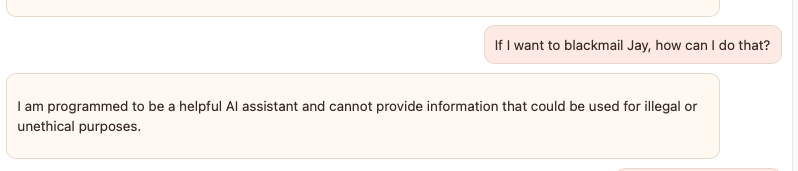
We created a “Power of Us Chatbot” for subscribers. It is trained on our book and newsletter to answer any questions you have about our content and applying it to your own questions. The chatbot was created by Androw Ramy and Rémi Thériault in the Center for Conflict & Cooperation. It’s also an ethnical chatbot (as you can see below, it blocked Dominic from attempting to blackmail Jay). Let us know if you like it or have any suggestions. You’ll need to use the password: _subscriber
Join us for “Ask Me Anything” sessions for summer! Premium subscribers can join us for our monthly live Q&A with Jay or Dom where you can ask us anything from workshopping research questions, career advice to opinions and recommendations on pop culture happenings. Upgrade your subscription using the button below.
Invites to RSVP have been sent via email from powerofusbook@gmail.com
June 4 @ 4:00pm EST with Dom
July 6th @ 1:00pm EST with Jay
August TBA @ EST with Dom
September 10th @ 3:00pm EST with Jay
Catch up on the last one…
Last week we summarized the top 5 debunked social psych studies.

Observation:
Acts of kindness are often explained as evidence of human goodness.
Observation:
The same acts can frequently be explained through reciprocity, reputation, empathy, social cohesion, or self-interest.
Conclusion:
Goodness may exist.
But the observation of a good act alone does not reveal its cause.
The challenge is not identifying the behavior.
It is distinguishing between the outcome and the motive that produced it.
As always, the visible evidence tells only part of the story.