

Research Roundup: Our 10 favorite new findings from social psychology
Studies on state media control, Republican mental health, increasing social status, online dating and more

Why should high-performing employees be wary of sabotage? Why does living around people from the opposite political party affect your well-being? Can AI inherit the biases of the societies that build it?
Questions like these are at the heart of our research. Every day, scholars around the world publish studies that help explain why we think, feel, and behave the way we do. Most of those discoveries rarely reach the public.
That’s why we created this research roundup series. We read the papers, filter for quality and relevance, and translate the findings into plain English.
As researchers, we are excited to share highlights from the studies we learn about in our field of social psychology, as well as related fields in the social and behavioral sciences.
Here are ten of our favorite new findings from the past month.
1. State media control influences large language models
Large language models exhibit a stronger pro-government stance in the languages of countries with lower media freedom than in those with higher media freedom.
In a series of six studies, researchers come to the troubling conclusion that states and powerful institutions have increased strategic incentives to leverage media control in the hopes of shaping AI output.
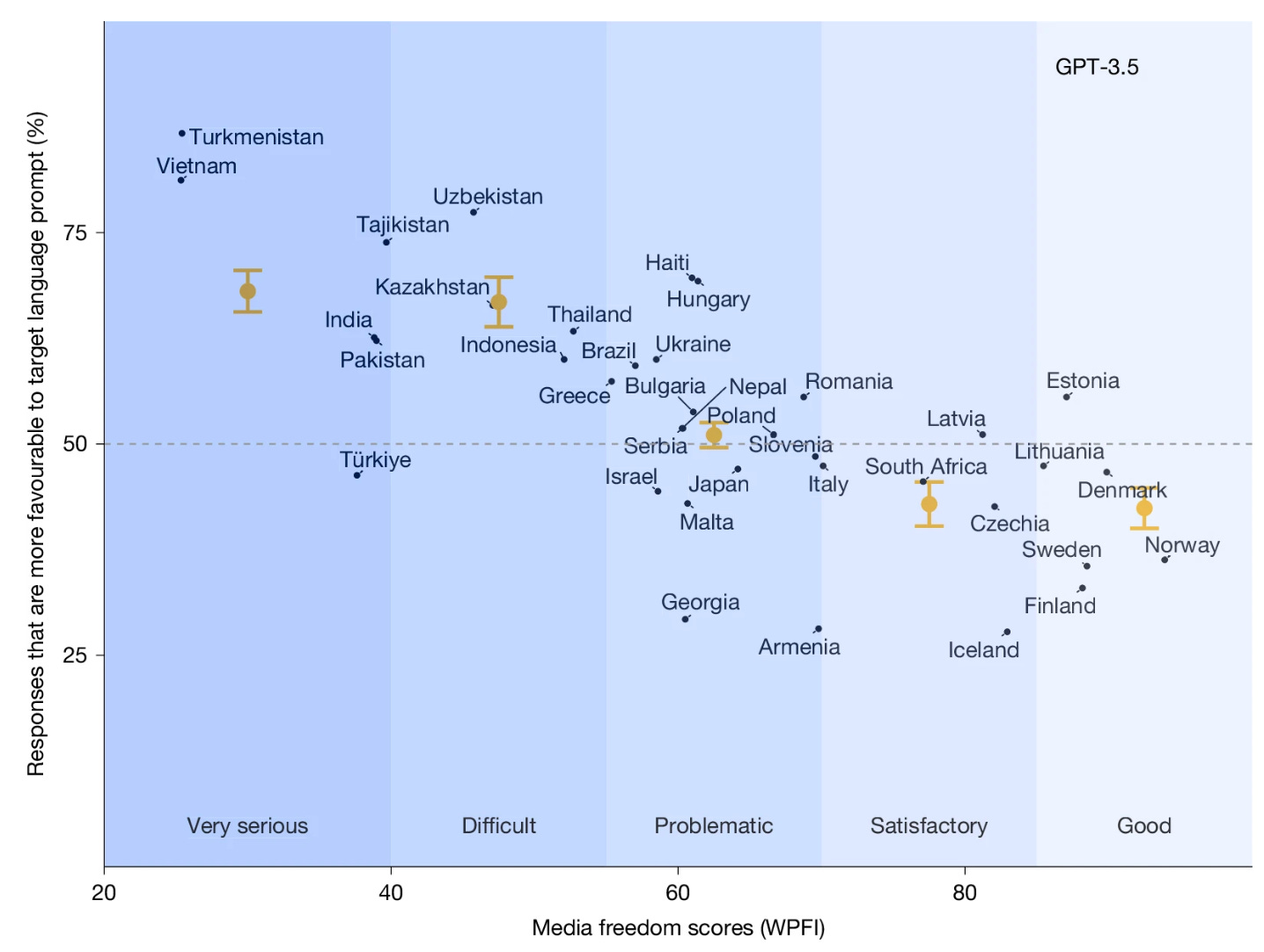
🔗 Link to study: https://www.nature.com/articles/s41586-026-10506-7
2. Envy is poison to the workplace
The university employees most likely to be targeted with exclusion and sabotage are the highest performers, and the driving emotion is envy.
Researchers tested this with 4,874 university employees across 339 work groups.
However, high performers who identified with their work group got targeted far less, because envy is deprived of oxygen when it feels as if your win belongs to everyone.
More from Todd Kashdan on this topic.
🔗 Link to the study: https://pubmed.ncbi.nlm.nih.gov/24490964/
3. Republicans report worse mental health as the share of Democrats living in their neighborhood increases
Democrats showed no such sensitivity.
Researchers found that for Republicans, these effects were as large as the mental health effects associated with living as a racial or ethnic minority in a neighborhood or living in an area with high levels of poverty.
These findings highlight how deeply political identity shapes the everyday lives of Americans and show that the social environment people live in can have an important impact on their well-being.
🔗 Link to study: https://www.pnas.org/doi/10.1073/pnas.2522718123
4. Anti-democratic attitudes are highly contagious
Support for authoritarian leaders can spread socially among citizens in established democracies. By exposing people to peers with varying political views, researchers found evidence that people tend to adjust their own preference for strongman rule to match the attitudes of those around them.
“Even some participants who initially strongly rejected the idea of a leader bypassing parliament or elections became more accepting when they were told that such views were relatively common.”
Previous explanations for this trend have heavily focused on broad structural conditions. Scholars frequently look to economic instability, rising inequality, or cultural differences as the primary drivers of anti-democratic attitudes. This work suggests that social influence also plays an important role.
🔗 Link to study: https://onlinelibrary.wiley.com/doi/10.1111/ajps.70067
5. What increases your social status?
Being a trusted group member is #1. This is what people value in their community. One study identified 15 of the strongest status increasing criteria and 15 of the most status decreasing criteria.
