

How to feel more loved
70% of people don’t feel loved as much or as often as they’d like, this new book explains how to build stronger relationships

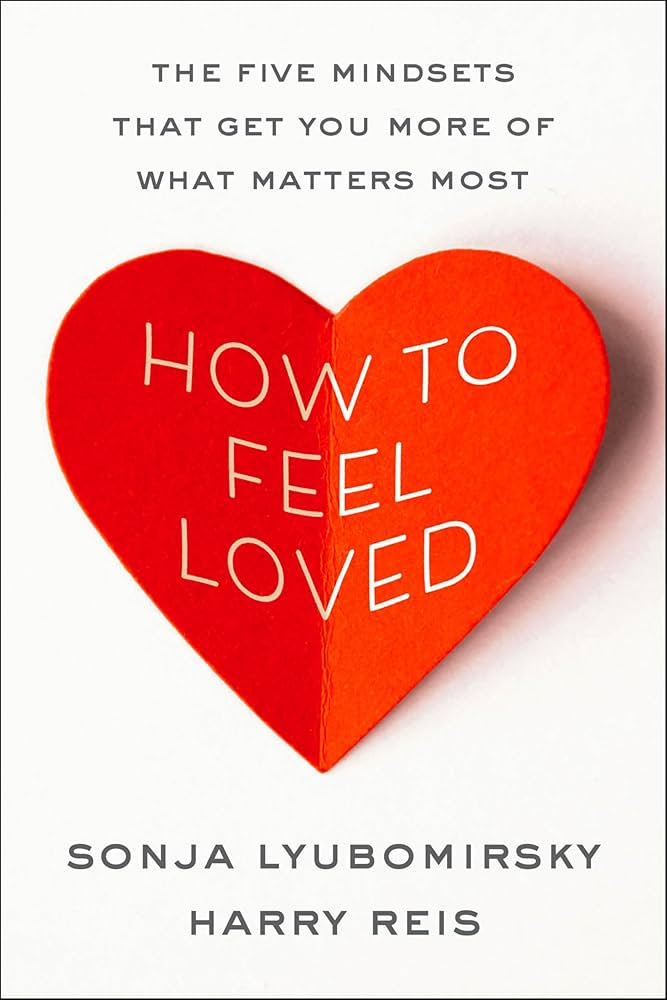
Love isn’t just something we give or receive, it’s something we communicate. In HOW TO FEEL LOVED: The Five Mindsets That Get You More of What Matters Most, happiness researcher Sonja Lyubomirsky and relationship scientist Harry Reis argue that many of us are already loved, yet still feel unseen and disconnected. The gap isn’t about effort or compatibility, but about how we show up in our relationships.
Drawing on decades of research in psychology and human connection, the authors introduce five practical mindsets designed to transform how we relate to others, which involves embracing vulnerability to expressing genuine curiosity. At the heart of their framework is a simple idea: feeling loved requires being truly known, and allowing others the space to be known in return.
If you want to feel more loved, you don’t need to change yourself. You don’t need to change the other person. You just have to change the conversation. — Sonja Lyubomirsky
We interviewed Sonja about her new book and she explained why these ideas should reshape the way we think about identity and connection — and why something as small as asking one more thoughtful question might be the key to a more meaningful relationship. You can buy their book HOW TO FEEL LOVED here. We are also giving away a few free copies—see the details at the end of the interview to enter the draw.
What does your book teach us about social identity or group dynamics?
The book teaches us that we can build connections with other people even when we don’t share a common identity with them, and even across political, religious, and cultural divides. In How To Feel Loved, I describe the kinds of questions that are likely to foster meaningful conversations rather than ho-hum responses. For example, rather than staying on the surface, ask questions that dig deeper into what makes the other person a unique, thoughtful human. When you do this, it is more likely that your conversation partner will feel seen and appreciated, and you will have learned something important about them. That's the kind of conversation that builds connections.
What is the most important idea readers will learn from your book?
Many of us ARE loved, but we don’t always FEEL loved. If you want to feel more loved in a particular relationship in your life, you don’t need to broadcast your successes or try to make yourself more lovable. By contrast, feeling loved requires being truly KNOWN to the other person and truly knowing THEM. This means talking to others in a way that takes down the walls between us.
We encourage readers to embrace five mindsets to make this happen:
Sharing Mindset (open up, be real, be vulnerable),
Listening-to-Learn Mindset (listen like there’s going to be a quiz tomorrow, as opposed to waiting for your turn to respond),
Radical Curiosity Mindset (show enthusiastic, authentic interest in the other’s inner world; ask them deep questions),
Open-Heart mindset (show warmth, kindness, and a belief in their dreams), and
Multiplicity Mindset (be accepting of their flaws, don’t define a person by one trait or one behavior).
What is one factoid, statistic or study in your book that everyone should know?
70% of people don’t feel loved as much or as often as they’d like, and 40% don’t feel loved as much or as often as they’d like by their romantic partners.
In 2024, we gave a survey to a large and representative sample of Americans, asking how much they felt loved in various relationships, and whether they wanted to feel more loved. 70% of people don’t feel loved as much or as often as they’d like, and 40% don’t feel loved as much or as often as they’d like by their romantic partners. The takeaway message from this survey: there’s much room for improvement. A large majority of us want to feel more love in our lives. The 5 mindsets we describe in our book will help people achieve that goal.
What will readers find provocative or controversial about your book?
Not feeling loved isn’t about personal deficiencies or a partner’s behavior--two convenient explanations most of us fall into. When we don’t feel loved, we believe that we should make ourselves more lovable (e.g., by broadcasting our positive qualities and hiding our weaknesses). We argue this is a myth.
Do you have any practical advice for people who want to apply these ideas (e.g., three tips for the real world)?
Share something real about yourself, be vulnerable, but start small. Pacing is really important. Start with a small or medium thing to open up about--e.g., instead of saying, “I’m fine,” explain how your day is really going (e.g., “I had a rough morning”)
Listen to the other person in order to learn, not to respond. Quiet your voice and your inner chatter, so theirs can be heard. Stay with them instead of mentally rehearsing your next story.
Ask the other person one more question than you’d normally ask. Like, “How did that really feel?” or “What was the hardest thing about it?”
The three words that everyone loves to hear? They’re not “I love you.” They’re not “you’ve lost weight” and not “you were right.”
Those three words are “tell me more.” Such questions, when they’re authentic, signal that you’re right there with them. They’re a gift.
🎁 Book Giveaway Details 📖
To enter Sonja’s book giveaway, either…
Be a paid subscriber to the newsletter. Paid subscribers are automatically entered into all our monthly book giveaways!
You can subscribe or upgrade your subscription below.
If you are not a paid subscriber yet, make sure you have a free subscription and simply leave a comment answering the question below:
Which mindset can you embrace to improve your close relationship with someone in your life? (Sharing Mindset, Listening-to-Learn Mindset, Radical Curiosity Mindset, Open-Heart Mindset, Multipicity Mindset)
This giveaway is open to U.S. residents only. Enter before April 28th, 12 pm PST. Three winners will be selected at random and will receive an email from powerofusbook@gmail.com on April 29th, 2026.
Notes of the week
We are now sharing several new studies each week as they come out on our Power of Us substack app account. Please follow us on the app if you want to see the latest research on topics related to our newsletter. Here are some sample studies we shared this week:
Ask me Anything
We have one final monthly virtual meeting (Ask Me Anythings) for paid subscribers this spring! This is a chance for you to meet one-on-one or in small groups with Jay and Dom to talk about anything you want (e.g., our book, the topics we cover in this newsletter, our latest research, a problem you’re struggling with, or whatever else you would like). Our summer series will be announced soon.
May 6th, 2pm EST with Jay
Paid subscribers recieved an email from powerofusbook@gmail.com with details on how to sign up. Reply to this email with any questions you have about this, or feedback on paid subscriber offerings.
Catch up on the last one…
Our last newsletter explained why social media is harming society, drawing on recent court cases, national polls, whistleblower testimony, internal documents, and our own research on the topic—they are all beginning to converge on a clear picture about these technologies.
How social media is harming society

Over the past few weeks, attitudes toward social media have shifted dramatically. A pair of landmark court rulings last month ruled that social media platforms like Facebook and Instagram used “addictive design” and harmed young users.
I think I could embrace the Listening-to-Learn mindset a bit more. As someone with ADHD I am always thinking ahead to my response. But, I fear it makes me miss key details that are revealed while my mind is busy coming up with the “perfect response”… I love all of these mindsets, though.
Can someone get my soon to be ex-husband a copy of this? The Radical Curiosity Mindset could’ve set our marriage on a different trajectory… instead it turned judgmental and blaming/shaming. Thanks for entering me into the contest!