

A few of our Favorite things from 2025
Our favorite shows, movies, podcasts, books, music, and more


As 2026 begins, we (Jay, Dom and Yvonne) are looking back and want to share some of our favorite books, podcasts, essays, and bits of pop culture from 2025. These are some of the things we most enjoyed — many of which are, in one way or another, linked to our interests in groups and identity.
Here are some of our favorite recommendations (with an eye towards the social psychology vibe of this newsletter)!
Jay’s Favorites:
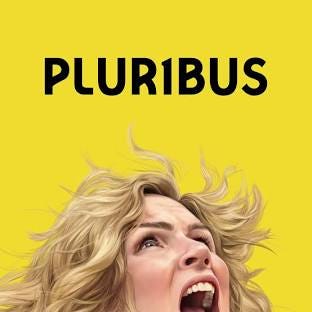
Show: My favorite show was The Studio (watch this hilarious scene to get a taste of it). But lately I’ve been obsessed with Pluribus—a new post-apocalyptic science fiction television series starring Rhea Seehorn and created by Vince Gilligan (who produced Breaking Bad). The title of the series refers to e pluribus unum, the latin motto of the United States which means 'out of many, one'. The show follows an event in which an extraterrestrial virus transforms most of humanity into a peaceful and happy hive mind. The show is funny and enlightening because it violates most of our assumptions about an alien invasion. Instead of an evil borg, the Others in Pluribus are entirely benevolent and aim to please the few remaining humans who are not infected with the virus. This creates a novel moral dilemma: Would you embrace an alien hive mind takeover of the world if it meant the end of suffering around the globe?
Book: My recent favorite was “The Double Helix” by James Watson. I found it discarded in the basement of my apartment building and decided to read it over Christmas vacation. The book is an autobiographical account of the discovery of the double helix structure of DNA written by James D. Watson published in 1968. It is considered one of the best nonfiction books of the 20th century because it reveals the social dynamics of one of history’s most significant scientific discoveries. The book reveals that discovery of the structure of DNA was ultimately a team effort, with numerous people contributing to the scientific breakthrough, rather then the work of one or two individual geniuses. Watson, who recently died, became a scientific outcast because of his racist views. E.O. Wilson (one of my intellectual heroes) famously called James Watson "the most unpleasant human being I had ever met", and the book reveals why: Watson regularly disparages and insults his colleagues and was criticized for the sexist attitudes towards Rosalind Franklin, whose work was essential to the discovery of DNA structure (in fact, Watson admits that his impressions of Franklin were influenced by the sexism she faced at the very end of the book).
Podcast: I really enjoy the podcast “Search Engine”. My friend Ana Gantman always sends me the best episodes. Two of my favorites are “What if ayahuasca made you stop podcasting?” which is about how an anti-woke podcaster went on an intense drug trip and realized she was operating on a diet of rage fed to her by social media and, in turn, retired from podcasting. A complementary episode is “What are teenagers actually seeing on their phones?” which provides a disturbing view into how Gen-Z experiences the internet. It was based on a year-long experience to discover what algorithms are feeding the next generation on social media. Both episodes should give you pause the next time you log onto social media.
Substack Essay: I’m reading far more Substack articles lately and one of my favorites was an essay from the philosopher Dan Williams, entitled “Tribalism Corrupts Politics (Even When One Side Is Worse)”. He dismantles the claim that people who study tribalism or polarization are “fascist enablers”. I don’t always agree with Williams (especially about his takes on social media and misinformation), but he is always interesting to read and he absolutely nails this critique. As he correctly notes, willfully ignoring polarization directly undercuts our understanding of authoritarianism:
“The dangers of polarisation are not a distraction from right-wing authoritarianism. They’re essential for understanding its attractions. Intense affective polarisation often transforms political opponents into existential threats, thereby increasing the appeal of authoritarian politics among a broad public.”
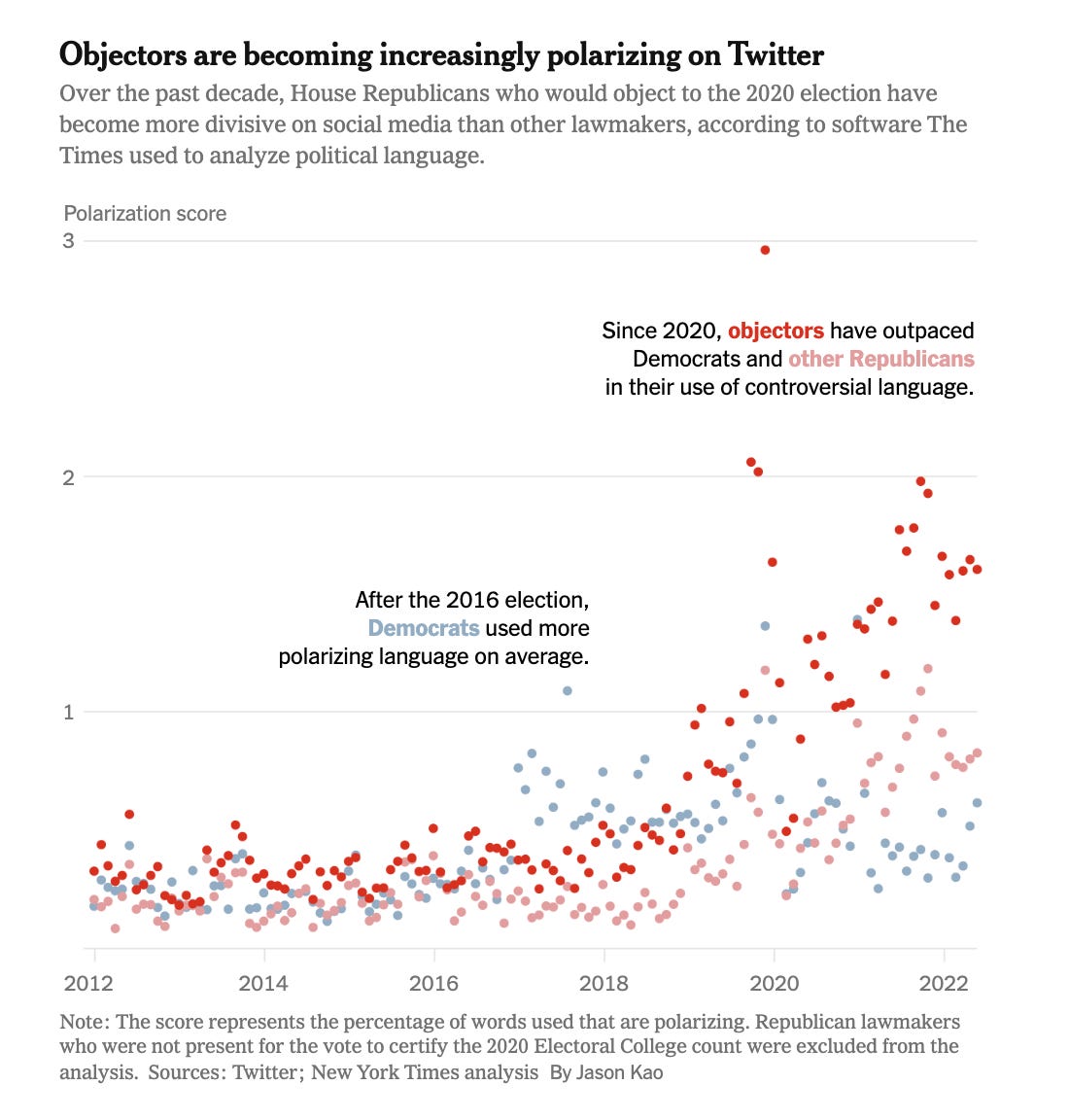
Of course, a more mundane argument is that studying pretty much any topic does not enable fascism. Such critiques of scholarship are absurd—and offensive—on their face. But Williams explains why they are also wrong from a historical and academic perspective. Indeed, I have some research on this myself—the most polarized individuals are the most anti-Democratic. The NYT used our polarization dictionary and found the same thing among Republican members of congress. The politicians who used the most polarizing rhetoric were also the most likely to try and overturn the 2020 election.
Dom’s Favorites:
Books: Partly out of curiosity and partly because it’s my job, I read a great deal about artificial intelligence in 2025. The best book, by some measure in my opinion, was How to Think About AI: A Guide For The Perplexed by Richard Susskind. True to his title, Susskind spends little time on the technical aspects of these rapidly advancing tools and focuses instead on how we can make sense of them and their impact. He suggests that most debates about AI systems (not) replicating human [creativity, empathy, judgment, whatever…] conflate process with outcomes: AI doesn’t do the work in human-like ways, but the results are increasingly hard to distinguish.
My fiction favorite was the novel What We Can Know by the great Ian McEwan. Set roughly a hundred years in the future after decades of calamities, in a world much more waterlogged than our present, a historian searches for a storied love poem written in 2014 but long since lost. It’s a novel about memory and myths, about the stories we tell ourselves to make life intelligible:
“The imagined lords it over the actual – no paradox or mystery there. Many religious believers do not want their God depicted or described. Happiness is ours if we do not have to learn how our electronic machines work. As individuals or nations we embellish our own histories to make ourselves seem better than we are. Living out our lives within unexamined or contradictory assumptions, we inhabit a fog of dreams and seem to need them.”
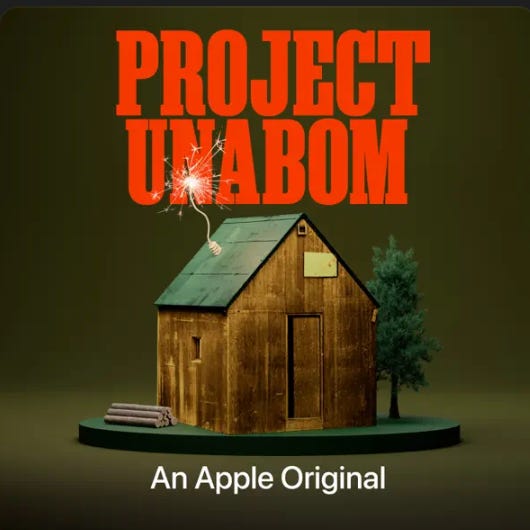
Podcasts: My favorite short podcast series this year was Project Unabomb about the 17-year hunt for Ted Kaczynski. Did you know that the name Unabomber is short for “University and Airline Bomber” because his early targets included a university and an airline? Or that his brother who ultimately figured out his identity and turned him in once lived in a hole in the desert, a home even more primitive than Kaczynski’s infamous hut in the woods? Or that a weird 1980s moral panic about the role-playing game Dungeons & Dragons led the FBI to suspect a group of nerdy teenagers, kicking off a goose-chase that lasted years? I didn’t!
My go-to long-running podcast was Past Present Future, hosted by political scientist David Runciman. A series of episodes on “The History of Bad Ideas” tackles such juicy topics as charisma, televised leadership debates, genius, Nobel Prizes, the marketplace of ideas, value-free tech, and austerity. I was nervous to listen to the critique of identity and relieved to hear that his views largely align with ours: identity as something deep down and internal that one is born with is, indeed, a bad idea. We agree (as does Spinoza, apparently) that identity is formed through interaction with others.
Music: Rosalía’s album LUX. There’s nothing particularly original about this pick—it topped many best-of lists for the year. But it is gorgeous.
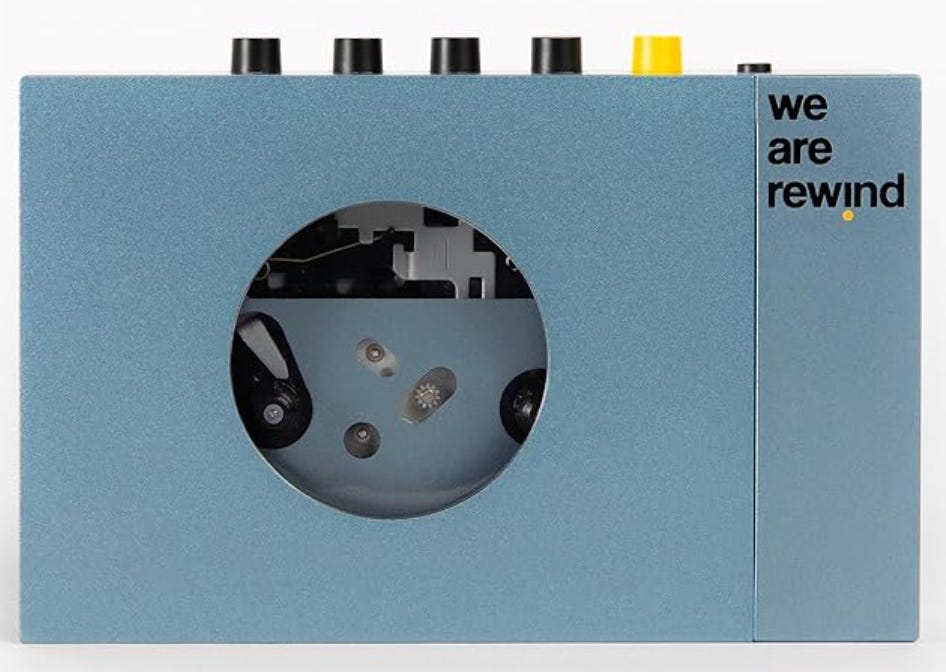
Tech: A wave of nostalgia and an urgent desire to make a mixed tape for a friend caused me to buy this cassette player from We Are Rewind. I love it more than I can justify.
Yvonne’s favorites
Movie: Zootopia 2 was so fun to watch during opening weekend. I watched the first Zootopia when my research focus was stereotyping models and social hierarchies (in undergrad). I appreciate the goofy ah humor in the movie juxtaposed with vast, heavy-hitting sociopolitical and psychological themes. There is so much for social science researchers to identify and analyze.
Music: Caitlin Canty’s latest album, Night Owl Envies The Morning Dove has been on heavy rotation since its October release. Caitlyn is a singer-songwriter who blends folk, country and blues and her rich lyrics inspire me to become a better writer. One of my favorite songs on the record, Open The Window depicts a homey scene of dancing in the kitchen with someone you love. And I must link this live performance of her song, Salt Water. It’s so chilling and the song is packed with themes of physical/emotional depletion, vices, intimacy and drifting in an unsustainable relationship. The way she plays her guitar in the beginning of the song is different than the bridge and I felt something shift in my soul the first time I watched her perform it.
Book: (First non-social science book favorite!) Earlier this year I finally got my hands on a reasonably-priced copy of The Art of Makeup by Kevyn Aucoin. He is such a legendary makeup artist and the book is filled with images and explanations on how he created his most iconic looks on supermodels like Naomi Campbell and Christy Turlington. The looks in there make me nostalgic for early 90s style.
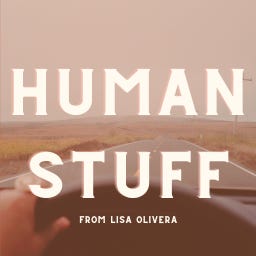
Substack: I often feel reflective and grateful after reading Lisa Olivera’s Substack newsletters. Lisa is a psychotherapist and writer (Already Enough, When the Ache Remains) and it can honestly feel sad to get to know her because she is very real and honest. But her writing and ideas remind me that despite all the darkness in the world, people are still creating beautiful things. I love the feeling I get after reading her newsletter, taking a pause, then hitting the forward button to send it to a friend.
News and Updates
Check out our new Ask Me Anything sessions for the new year! Paid subscribers can join us for our monthly live Q&A with Jay or Dom where you can ask us anything from workshopping research questions, career advice to opinions and recommendations on pop culture happenings — for paid subscribers only. Upgrade your subscription using the button below. Invites to RSVP have been sent via email from powerofusbook@gmail.com
January 21st @ 2:00 EST with Jay
February 20 @ 2:00 EST with Dom
March 4th @ 2:00 EST with Jay
April 17 @ 2:00 EST with Dom
May 6th @ 2:00 EST with Jay
Catch up on the last one…
Last week, we celebrated our newsletter’s growth over the past year and looked back on the top 6 posts of 2025!
